
Paintings of the Subsoil

The section “Paintings of the Subsoil” constitutes the third thematic area of Archaeologies of the Anthropocene: Fragments of a Wounded Planet. This body of images offers a visual immersion into terrestrial textures and strata that, paradoxically, recall abstract painting. Within this space, human residue is not captured as mere waste, but as the constitutive material of a new visual language. The work situates itself within an archaeology of the present, seeking to render visible what ordinarily remains concealed beneath the surface of the everyday.

Matter as Pigment

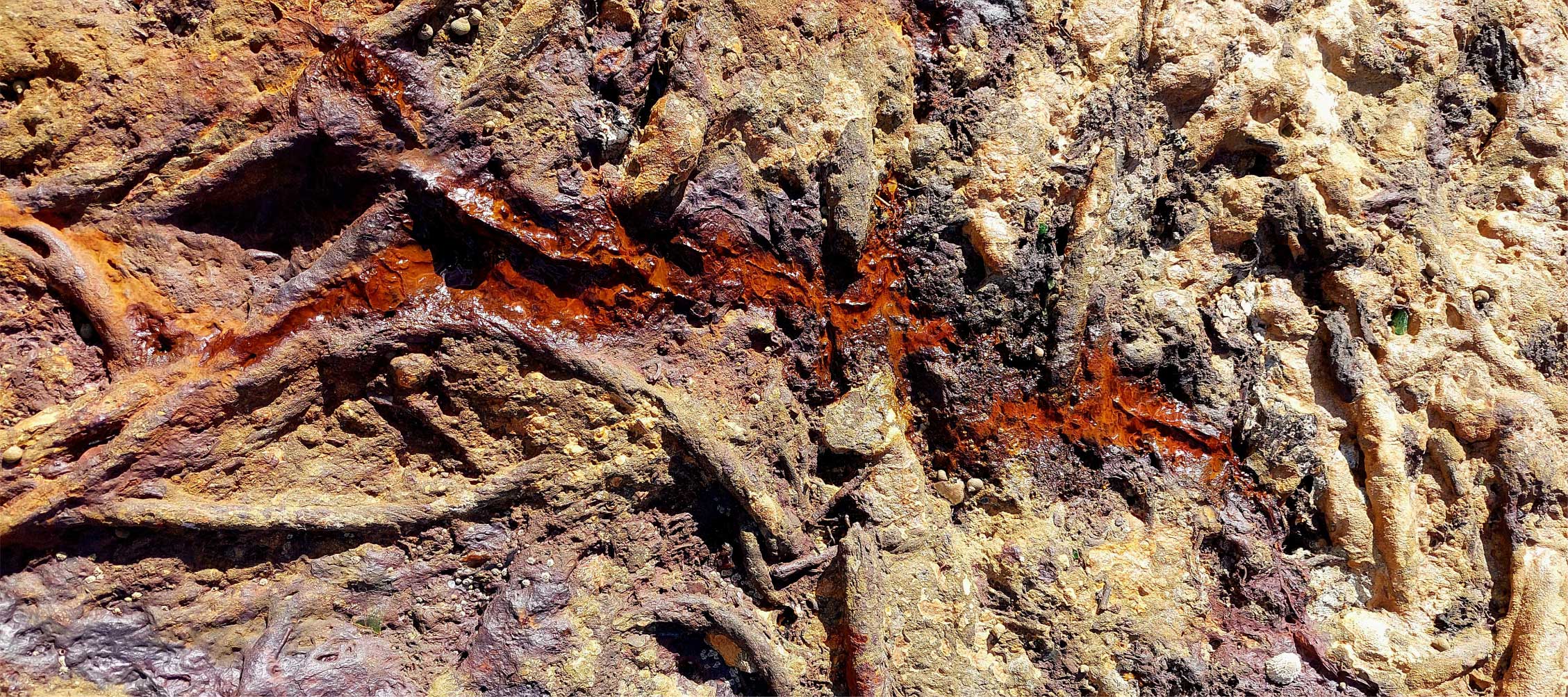
The central concept of these “paintings” lies in the transformation of the materials our civilisation introduces into the environment. During explorations along the coast of Gran Canaria, the artist encountered terrain revealing sedimented layers where nature and residue coexisted in an unsettling proximity. From such findings — oxidised metals among them — emerges an accidental yet powerful chromatic palette.

The photographs document how oxides behave like abstract paint, generating compositions that compel us to reconsider the aesthetics of our planetary trace. Formally, the captured scenes resonate with key artistic movements of the twentieth century, recalling Art Informel, material abstraction and a kind of subterranean collage. Works such as The Wound of the Stratum Mural or The Wound of the Stratum on Table, as Grid in the Work Field exemplify this aesthetic, where red oxides act as pigment.


The Fossil of the Future

This process of corrosion and sedimentation constitutes, in essence, the visual signature of the current geological era: the Anthropocene. The term designates a period defined by the human imprint upon the planet, in which the Earth, the oceans and the atmosphere already preserve layers of plastic waste, metals, concrete and radioactive ash. These now-unrecognisable fragments are embedded in the ground, resisting natural integration.


Paintings of the Subsoil captures this moment of transition: waste, slowly absorbed by its surroundings, becomes vestige. By photographing fragments of a time that has not yet concluded, the exhibition reinforces one of the project’s central theses: from eroded matter, form emerges. Residue becomes memory; trace becomes language.

The images in this section invite us to contemplate our own impact as a contemporary stratigraphy, where the active remains of our civilisation have transformed into art — a raw document bearing witness to an altered planetary metabolism. It is a gesture of radical observation, aesthetic and critical, reflecting what we are when our discarded matter fuses with the landscape.


The Wound of the Stratum

Artist: José R. Martín (Jrmartin), 2025
Series: Paintings of the Subsoil
Medium: Digital photograph printed on canvas
Dimensions: 160 × 80 cm
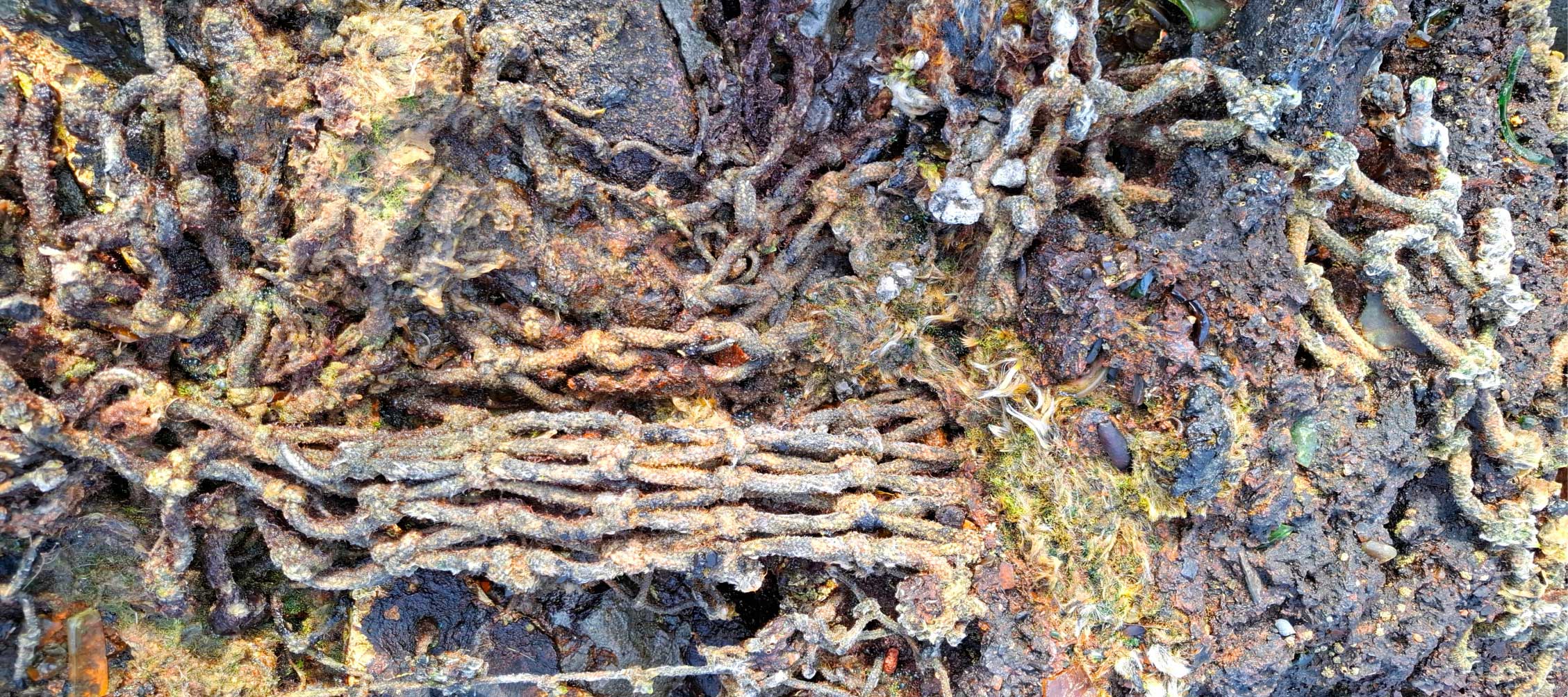
A cut into the coastal terrain reveals how human residues have become embedded within the stratum itself. Cables with metallic cores, plastics and industrial fragments — colonised by marine organisms — generate a reddish mark produced by oxidation, resembling a wound in the rock.

This is not a remnant of the past, but an active record of the present: the human trace irreversibly integrated into the natural processes of the shoreline.

Fossil Weave

Artist: José R. Martín (Jrmartin), 2025
Series: Paintings of the Subsoil
Medium: Digital photograph printed on canvas
Dimensions: 160 × 80 cm
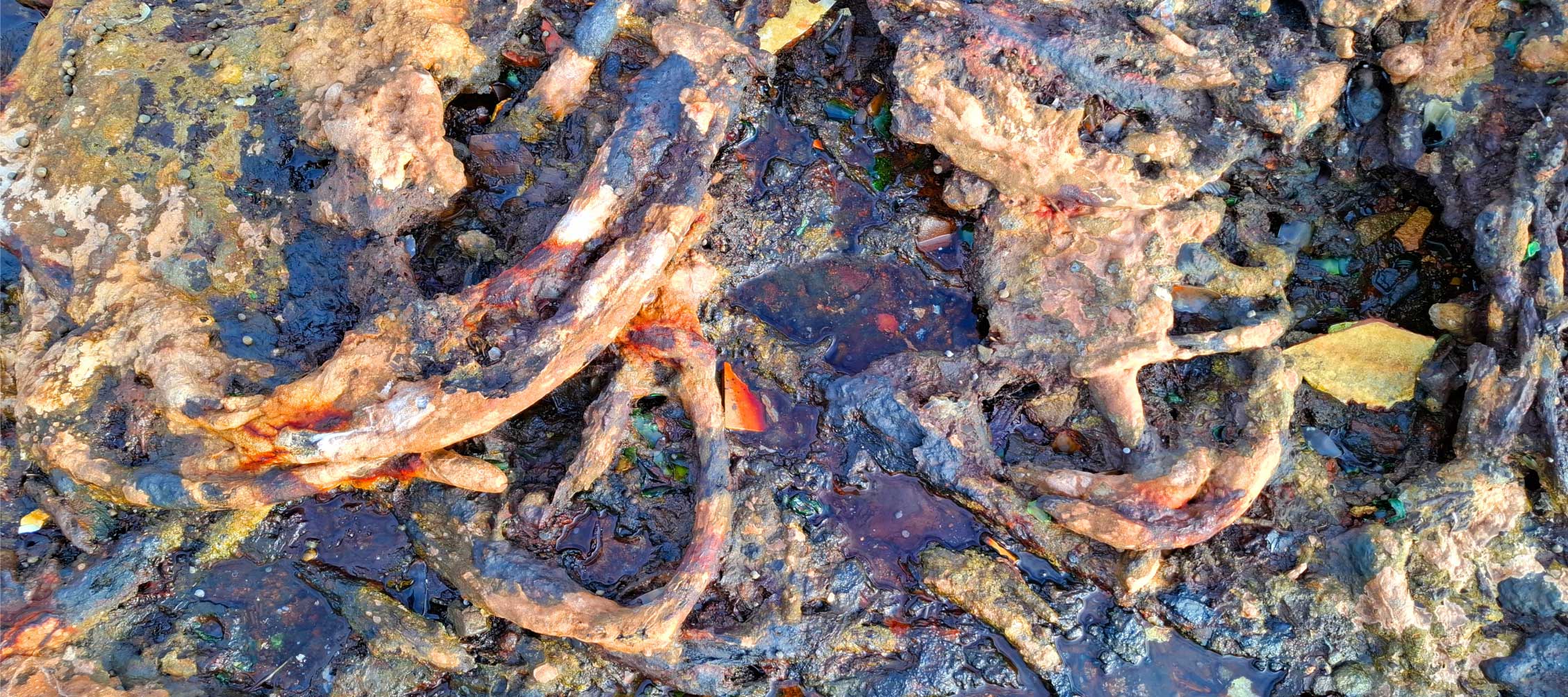
A cluster of industrial and fishing debris degraded by the sea has been absorbed into natural processes, acquiring an almost fossil-like appearance.

The action of salt, microorganisms and time transforms ropes and nets into substrate and habitat, erasing the boundary between human residue and natural form.

It is a contemporary fossil: an industrial trace integrated into the coastal landscape, suspended between the artificial and the organic.

Exhumed Veins

Artist: José R. Martín (Jrmartin), 2025
Series: Paintings of the Subsoil
Medium: Digital photograph printed on canvas
Dimensions: 160 × 80 cm
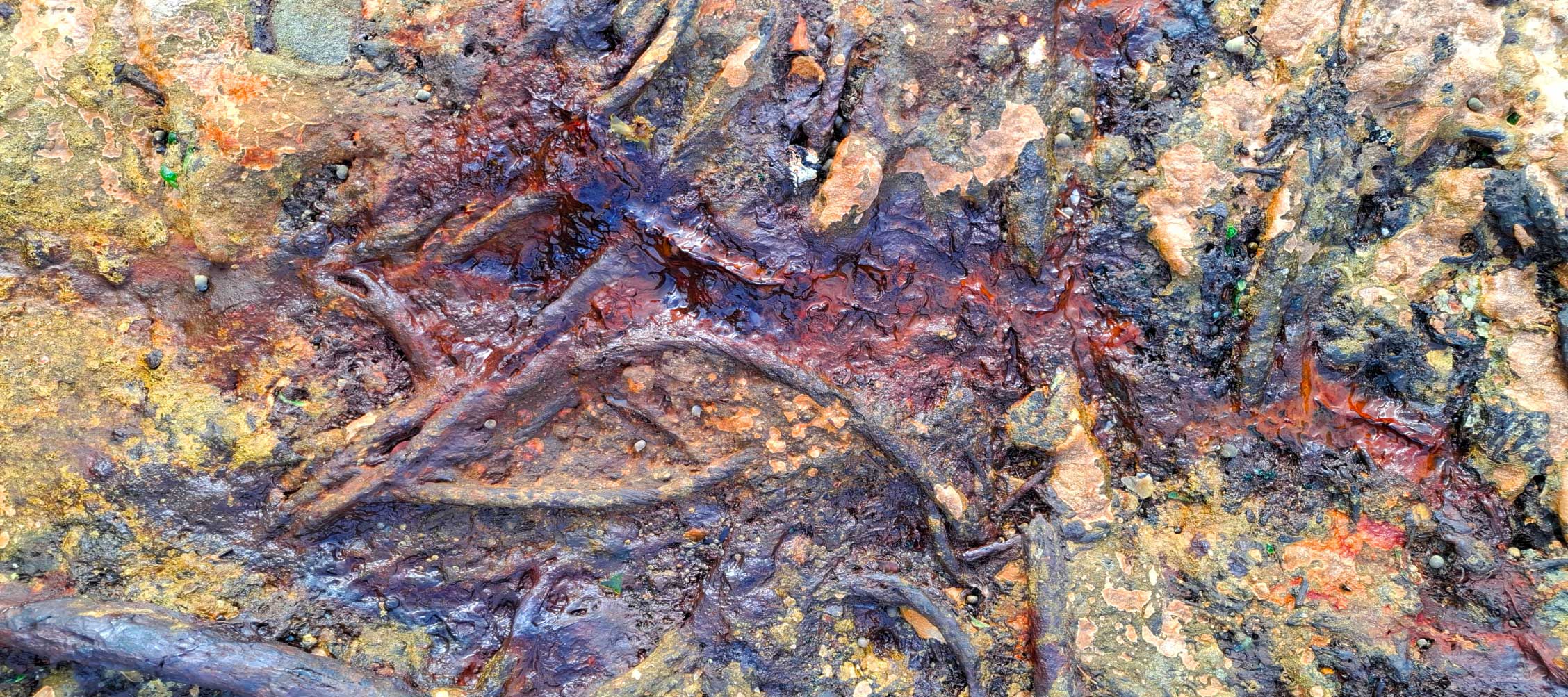
A coastal surface reveals corroded cables and metallic conduits, industrial fragments and ceramic remains embedded within a dark, oxidised stratum. These forms, recalling fossilised veins or nerves, expose how human residues have become integrated into the ground and re-emerge through erosion.

They are not archaeological remnants, but matter of the present: waste transformed into stratum, active traces of the Anthropocene still in process.

Oxidised Flow

Artist: José R. Martín (Jrmartin), 2025
Series: Paintings of the Subsoil
Medium: Digital photograph printed on canvas
Dimensions: 160 × 80 cm
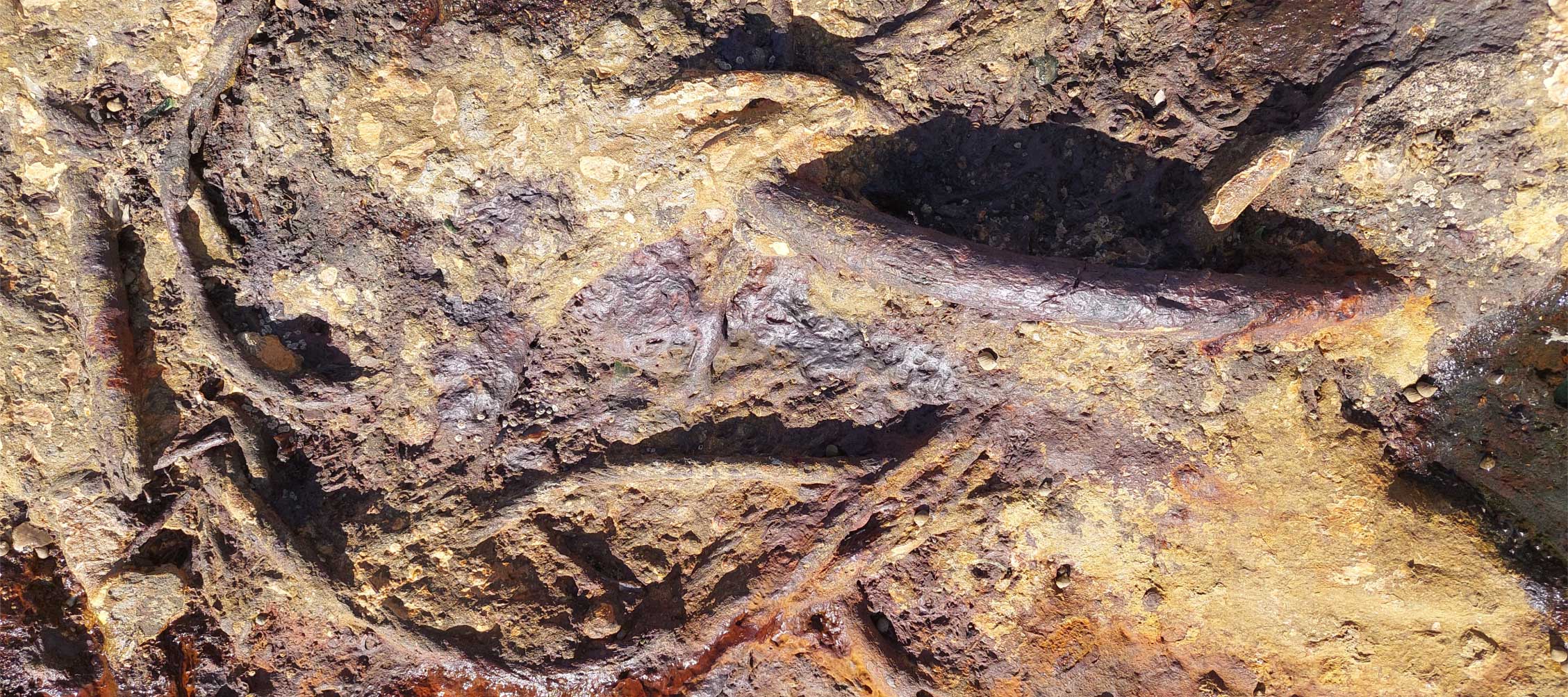
A hardened coastal stratum reveals oxidised metal cables trapped between sediments and organic matter, forming patterns reminiscent of a fossilised vascular system.

The continuous action of water and tides has integrated these industrial residues into the geology, dissolving the boundary between the natural and the artificial.

The result is a hybrid lithology: mineralised contamination which, though visually compelling, bears witness to an ongoing process of landscape degradation.

Inverted Fossil

Artist: José R. Martín (Jrmartin), 2025
Series: Paintings of the Subsoil
Medium: Digital photograph printed on canvas
Dimensions: 160 × 80 cm

A dark mark embedded within the coastal rock reveals an industrial residue transformed by oxidation and marine erosion.

Its form recalls a fossil, though not a biological one: it is the inverted trace of human activity, waste fixed by the sea into stone as a memory of the Anthropocene.

Suspended between document and unintended painting, the image records the prolonged encounter between artificial matter and natural processes.