
I look at the present as an archive and transform findings from the shoreline into a material record of the Anthropocene: works of photography, sculpture and installation using driftwood, corroded iron and eroded ceramics. Matter is central, and the sea acts as an agent that returns what we have discarded.
Rather than explaining, the project invites us to look closely and to read the human trace inscribed along the coast.
Introduction
Archaeologies of the Anthropocene: Fragments of a Wounded Planet was born during a walk along the coast while I was preparing and searching for inspiration for a Land Art performance as part of another project. That journey, documented in a previous installation, was not yet part of Archaeologies of the Anthropocene, but it became the initial gesture that gave rise to this new body of work — an unexpected drift or rupture from the earlier project.
During that walk, along an eroded stretch of shoreline, the sand revealed layers where natural matter and human waste coexisted as if they were geology: melted plastics, oxidised metals, concrete, pigments, fibres with a fossil-like appearance. These were not ruins of the past, but residues of the present transformed into strata. The landscape functioned as a living archive, recording within its own materiality the human trace upon the territory.
The exhibition is organised into four interconnected thematic sections, tracing a progressive journey from discovery to critical metaphor:
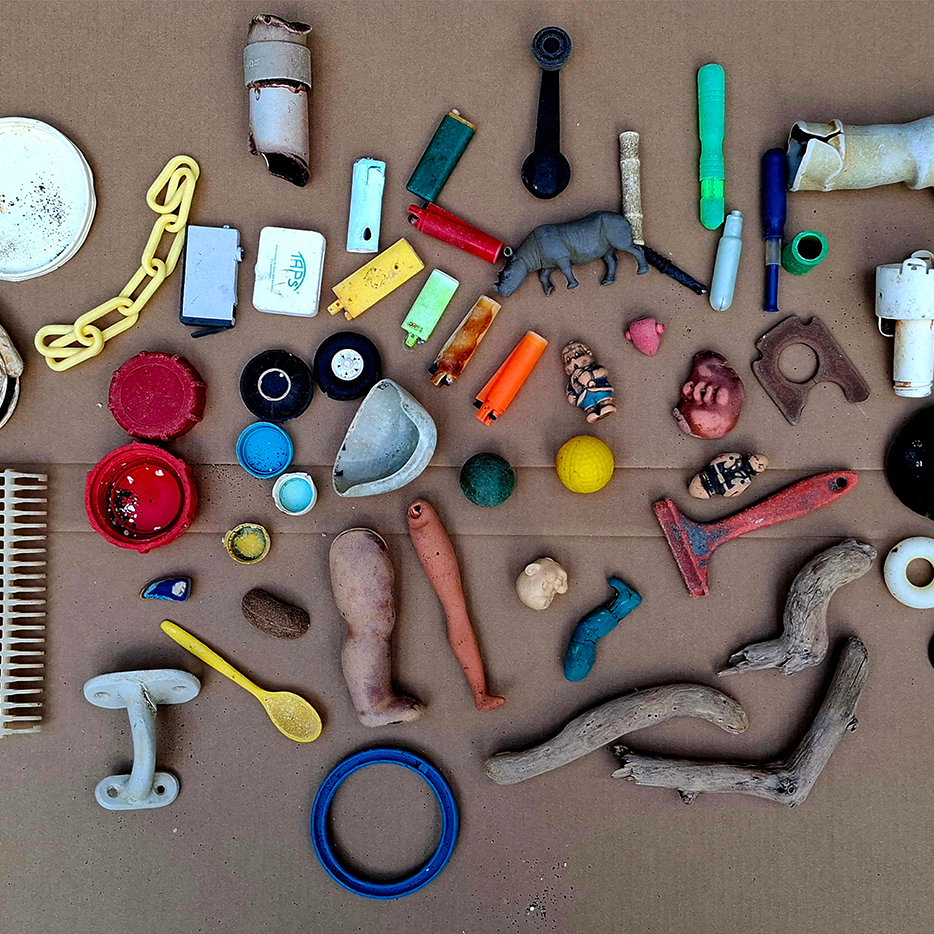
This section opens the trajectory of Archaeologies of the Anthropocene: Fragments of a Wounded Planet, transforming the remains collected in a cove on the island into real objects presented as findings.
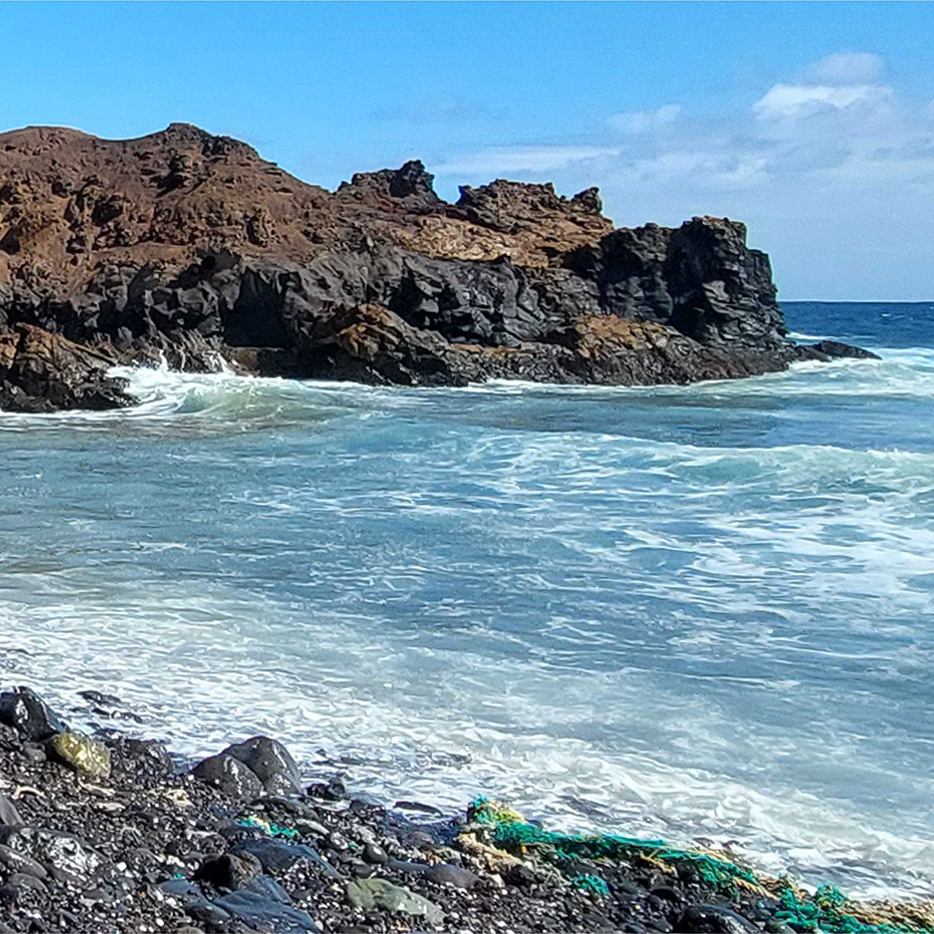
The section “Figures of the Shoreline” occupies the second place in the thematic structure of the exhibition. This area focuses on the transformative power of waste, where the fragments found acquire new visual identities.
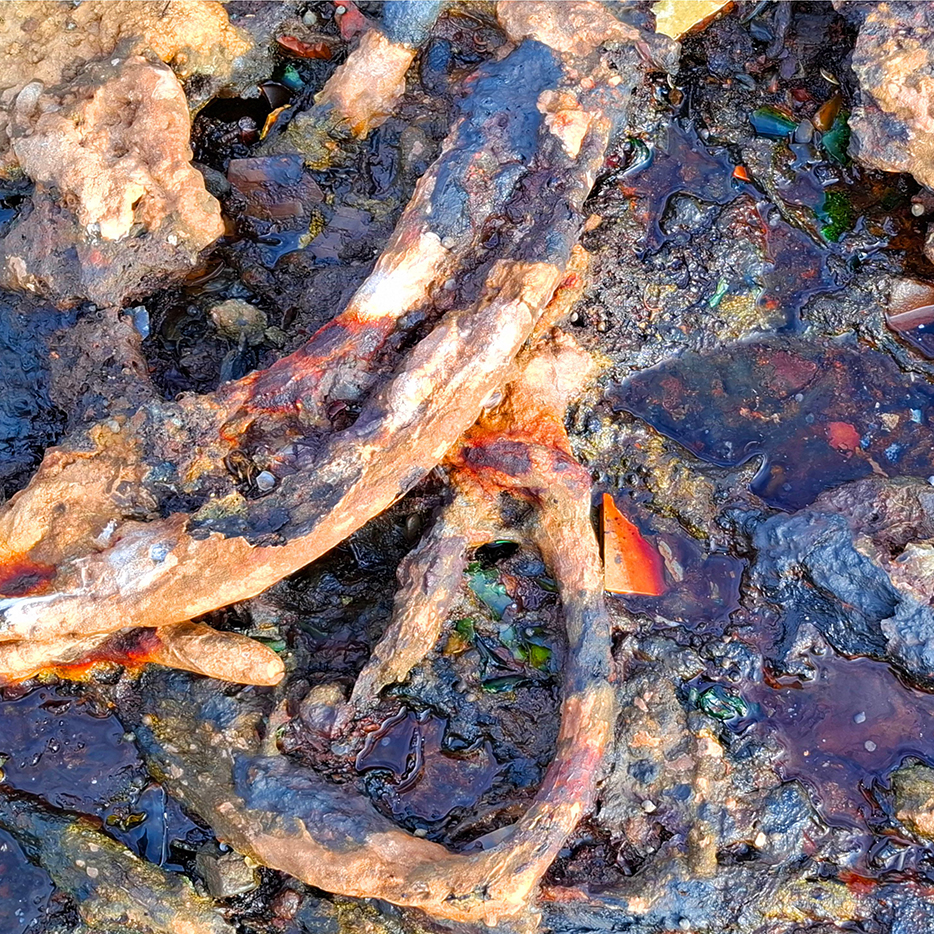
“Paintings of the Subsoil” constitutes the third thematic area of the exhibition. This body of images offers a visual immersion into textures and terrestrial strata that, paradoxically, recall abstract painting.
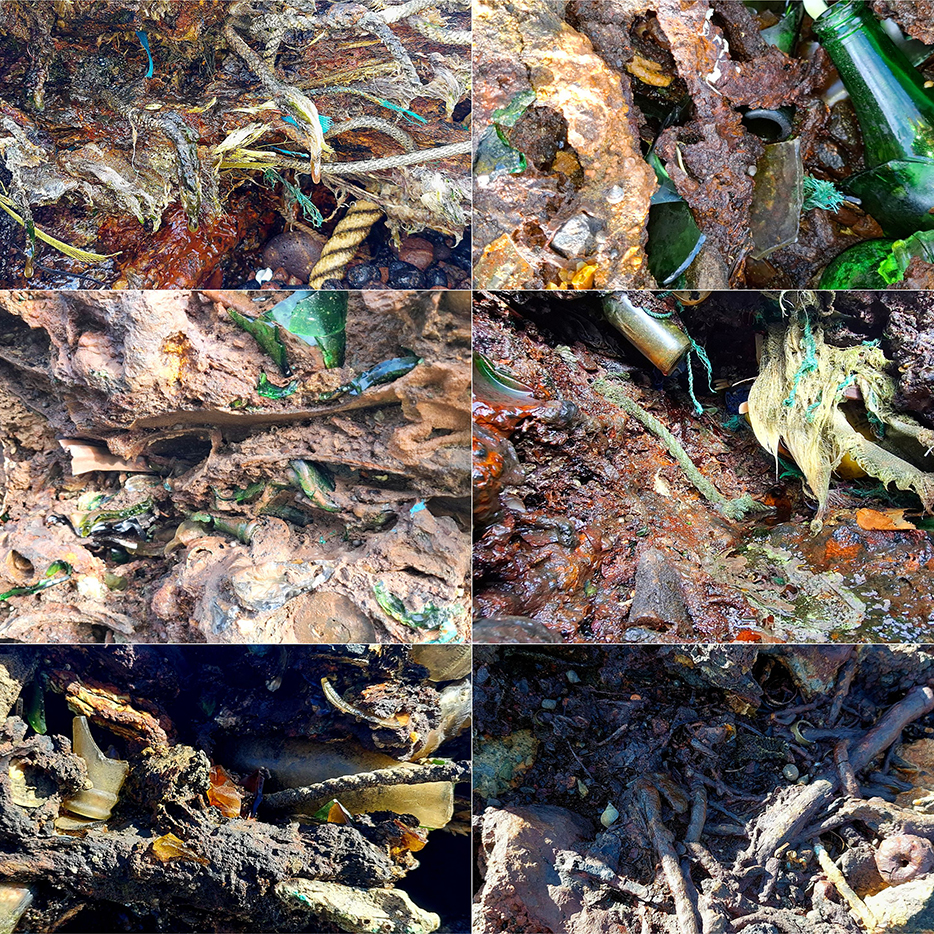
“Layers of the Present” brings the thematic journey of the exhibition to a close. Composed of photographic strata with embedded waste, this series of images establishes the project’s central perspective: the documentation of the human trace as a geological layer.