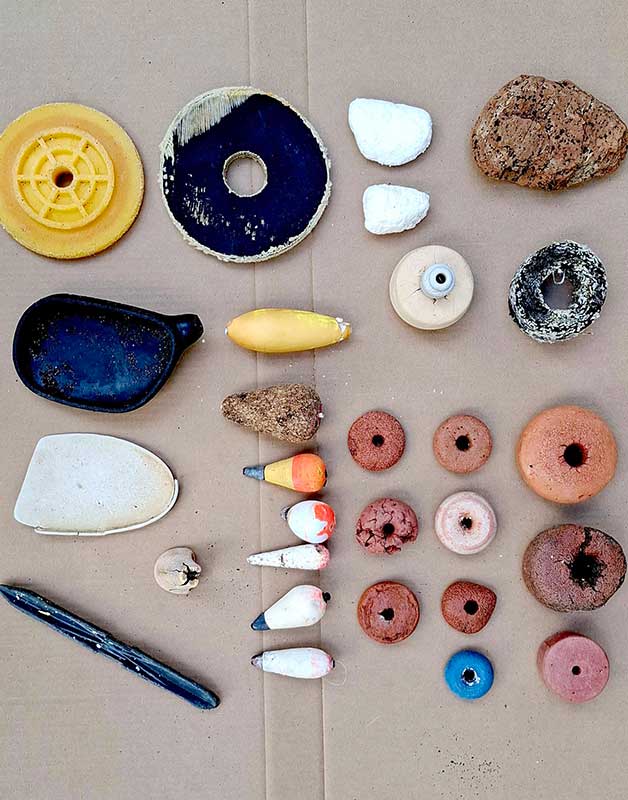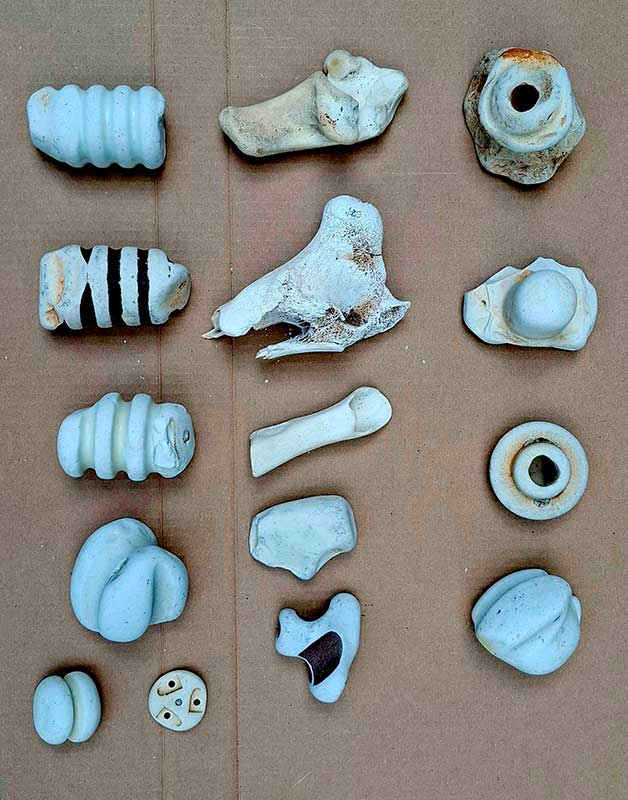

What the tide refused to take

Nothing shown here was fabricated. Everything was found.
This first part of the project brings together objects and fragments collected along the coast of Gran Canaria: plastics, metals, ceramics, industrial remnants and other materials transformed by time, the sea and erosion.
Removed from their usual context, they cease to be merely waste and become material evidence of our present.
I collect, observe and classify them without concealing their deterioration. By presenting them as finds, I invite them to be looked at with the kind of attention we normally reserve for remnants of other periods.
This is not an excavation of the past.
We are looking at what our own time is leaving behind.
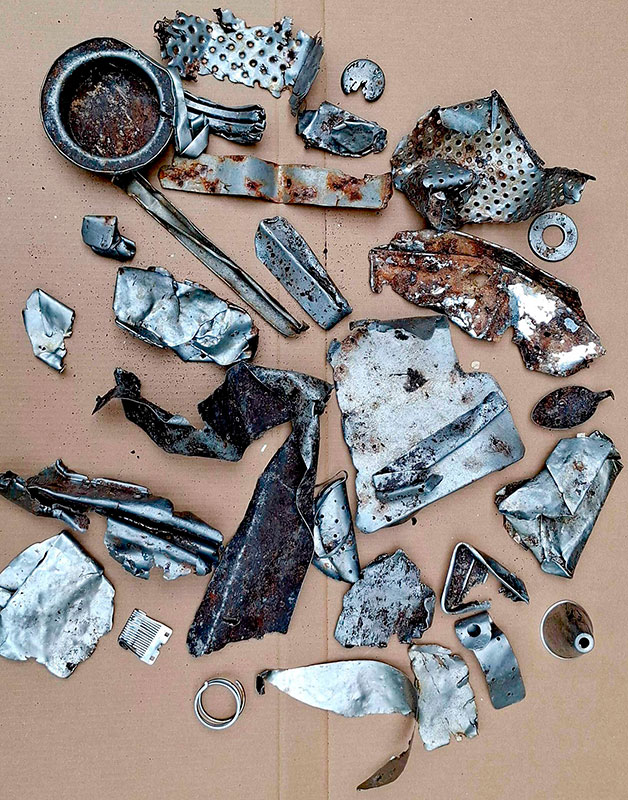
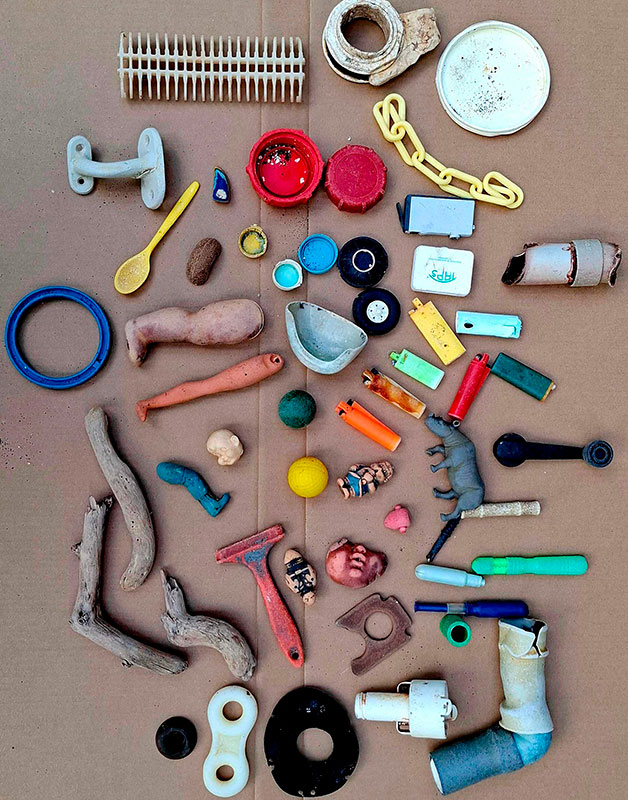
What the Tide Would Not Take Away is the part of the project most closely concerned with recording and collecting.
The objects were found during repeated visits to the shoreline. Some still retained a recognisable function; others had been fragmented, distorted or eroded until they were difficult to identify.
It was precisely this change of condition that interested me.
Objects that had once been manufactured, used and discarded had entered another process. The sea, sunlight, friction, corrosion and time had altered their appearance, yet had failed to make them disappear.
By collecting them and presenting them away from the place where they were found, I am not trying to turn them into precious objects or conceal their condition as waste.
I am doing the opposite: I am making them visible again.
Their presentation deliberately recalls the way we look at an archaeological find or an object preserved in a museum. This displacement allows us to look at a fragment of plastic, metal or ceramic with a different kind of attention and to ask what information it contains about the society that produced it.
Archaeology reconstructs aspects of past societies through the objects that remain.
Here, I use that idea artistically to look at our own time.
What might these remnants say about us if they were discovered one day, when we were no longer here?
That question turns waste into something more than an environmental problem.
It also becomes material memory.

The sea slowly transforms metal objects. Salt water, oxygen and time promote corrosion, altering their surfaces until their original purpose may become difficult to recognise.
Depending on the metal or alloy, this deterioration can release compounds into the surrounding environment and produce oxides, crusts and mineral deposits.
What was once a tool, component or structure begins to acquire another appearance.
The object remains, but its identity begins to fade.

Plastic does not readily disappear in the marine environment. Sunlight, water movement and erosion can progressively fragment it into smaller and smaller pieces, eventually producing microplastics.
These fragments may travel considerable distances, become trapped in sediments or be ingested by marine organisms.
The object loses its form, but the material remains.
A trace that becomes increasingly difficult to see without ceasing to exist.

Lightweight, fragile and persistent, polystyrene can fragment readily through exposure to sunlight, wave action and abrasion.
Small pieces may be carried by wind and currents, trapped among rocks and sediments, or mistaken for food by some organisms.
What begins as a recognisable object eventually becomes a multitude of fragments that are difficult to remove.
The material disperses, but it does not disappear.

Ceramic material can survive long after the object itself has lost its purpose. Wave action breaks, wears and rounds its fragments, but does not readily remove the material.
Among stones and sediment, these pieces may eventually resemble small mineral fragments, although their origin remains entirely human.
It is precisely because of their persistence that ceramics have long helped us reconstruct earlier societies.
Here, they appear as remnants of our own.