
Layers of the Present

“Layers of the Present” brings the thematic journey of the exhibition to a close. Composed of photographic strata with embedded waste, this series of images establishes the project’s central perspective: the documentation of the human trace as a geological layer.

The Stratigraphy of Our Time

The section “Layers of the Present” brings the thematic journey of Archaeologies of the Anthropocene: Fragments of a Wounded Planet to a close. Composed of photographic strata with embedded residues, this body of work establishes the project’s fundamental perspective: documenting the human trace as a geological layer.

The Landscape as Archive

The origin of this exploration lies in a walk along the coast of Gran Canaria, where land cracked by erosion revealed sedimented layers in which nature and human residue coexisted in unsettling proximity. The landscape ceased to be a mere setting and became an archive.

The photographs capture the texture of the terrain and the details that compose it, presenting them as archaeological cuts. These sections do not simply expose the surface; they visually penetrate recent history, operating as an archaeology of the present. The aim is to excavate the surface of the everyday in order to make visible what usually remains concealed.

The Integrated Trace

What emerges within these layers is the active coexistence of the remains of our civilisation embedded in the environment. Between sand and stone appear materials that neither dissolve nor biologically integrate: melted plastics, oxidised metals, fossil-like textiles and unrecognisable fragments.

Each documented stratum becomes a contemporary stratigraphy in which every buried object carries a silent narrative. These images move beyond the mere recording of waste; they capture the transformation of matter itself: ropes resemble roots, residues evoke scenes of scientific excavation.

The Fossil of the Anthropocene

The concept of “Layers of the Present” functions as a powerful visual metaphor for the Anthropocene. The term designates the current geological era, defined by the human imprint upon the planet. The oceans, the atmosphere and the Earth itself already preserve our signature: a layer of plastic waste, metals, concrete and radioactive ash that will constitute the fossil of the future.

The project centres on the persistence of residue as an anthropogenic marker, suggesting that the metabolic rupture with nature begins when human waste resists natural integration. By photographing these strata, the work proposes an attentive observation of sedimented residue — matter slowly absorbed by its surroundings and transformed into vestige.

A series of twelve A3 photographs printed on aluminium stand as tangible evidence that everything shown here was found. They are fragments of a time that has not yet concluded, traces of our own species before disappearance. This visual archaeology of the present reminds us that this is not an archaeology of the past, but of a present in the process of decay.

In Summary

If we imagine the history of the planet as a book whose pages are layers of sediment, “Layers of the Present” represents the pages we are writing now. The ink of this writing is not biodegradable; it is composed of the plastics and metals we have discarded, forming a permanent record that will be read by future generations — or perhaps by the geologists of tomorrow — as irrefutable evidence of our existence and our impact.

Layers of the Present 01

Artist: Jrmartin, 2025
Series: Layers of the Present
Medium: Digital print on aluminium
Dimensions: 42 × 30 cm
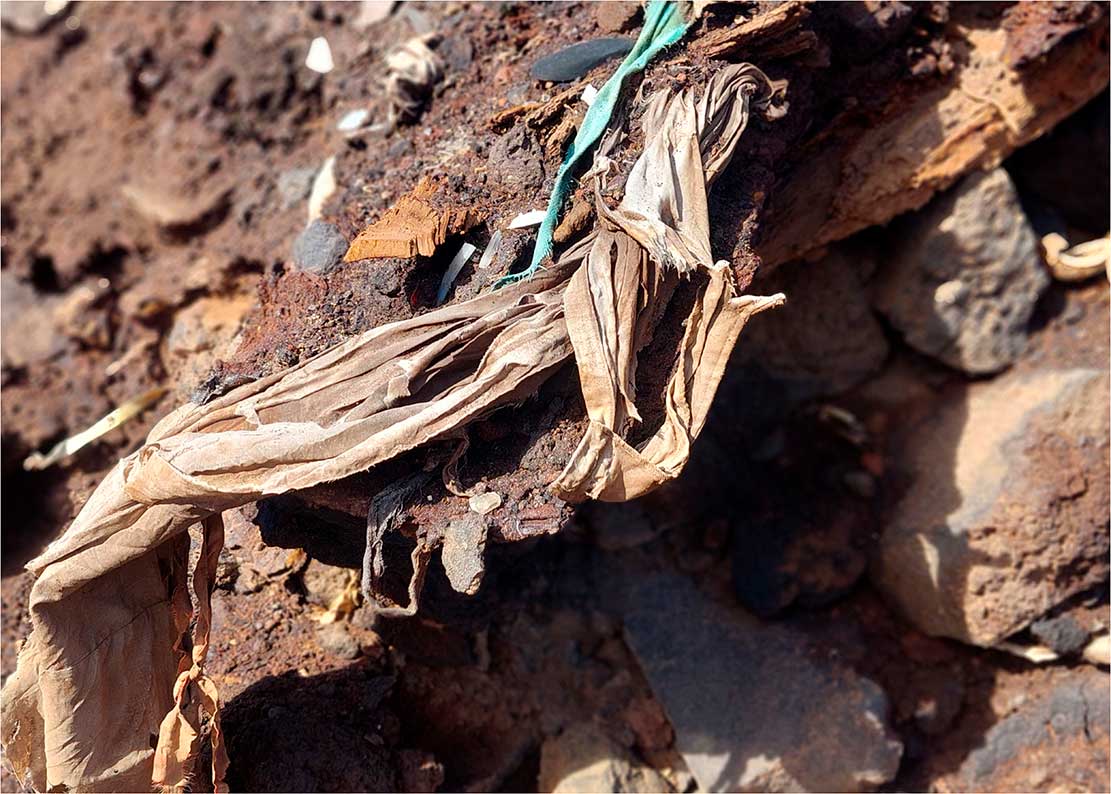
A fragment of synthetic textile emerges between layers of volcanic sediment, partially embedded within a stratum of basaltic origin. The fabric, deteriorated and stiffened by time, has been altered by processes of oxidation and weathering, transforming both its colour and its texture. Its position suggests progressive burial followed by exposure through erosion.

The image documents how human residues begin to integrate into geological dynamics, generating new stratigraphic records in coastal environments.

Layers of the Present 02

Artist: Jrmartin, 2025
Series: Layers of the Present
Medium: Digital print on aluminium
Dimensions: 42 × 30 cm
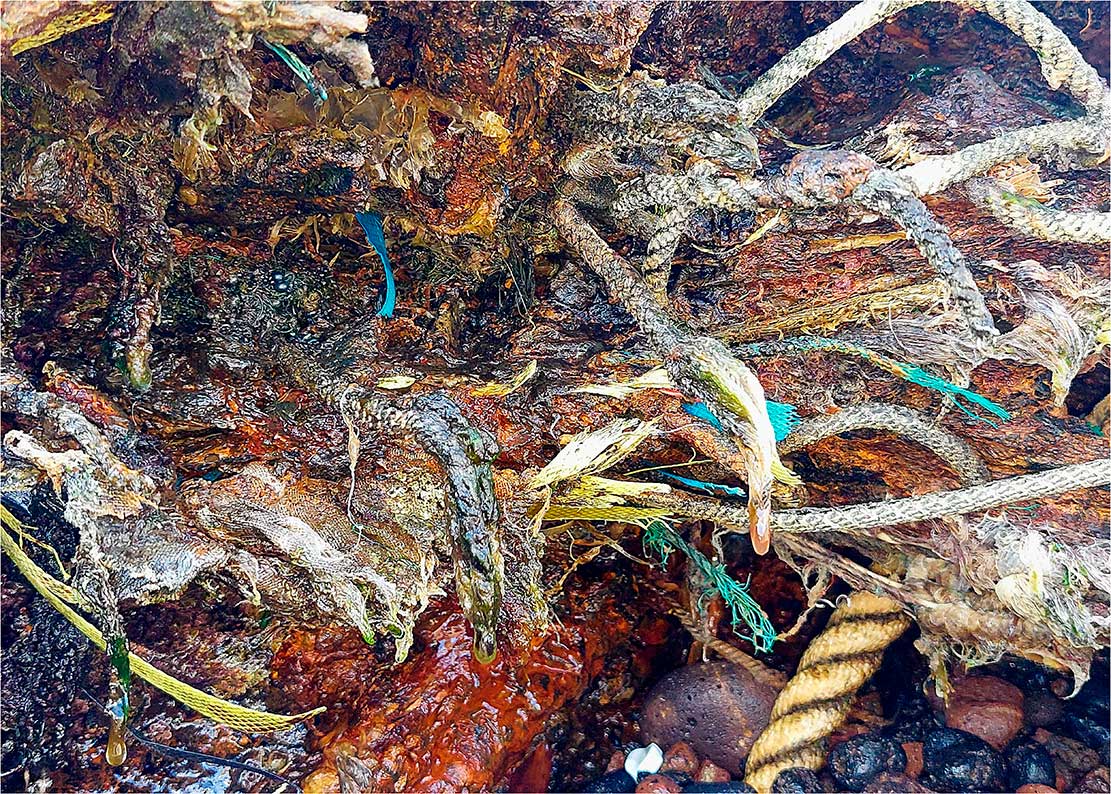
The stratum documented in this image belongs to an intertidal zone of volcanic substrate, where plastic remains, textile fibres and metallic fragments can be observed partially embedded within a sandy matrix. The assemblage shows clear signs of marine weathering, with salt deposits and surface alterations affecting the materials.

These residues, likely transported by tides and coastal currents, have become fixed within a layer resembling a recent archaeological horizon, revealing how contemporary waste becomes incorporated into natural sedimentary dynamics.

Layers of the Present 03

Artist: Jrmartin, 2025
Series: Layers of the Present
Medium: Digital print on aluminium
Dimensions: 42 × 30 cm
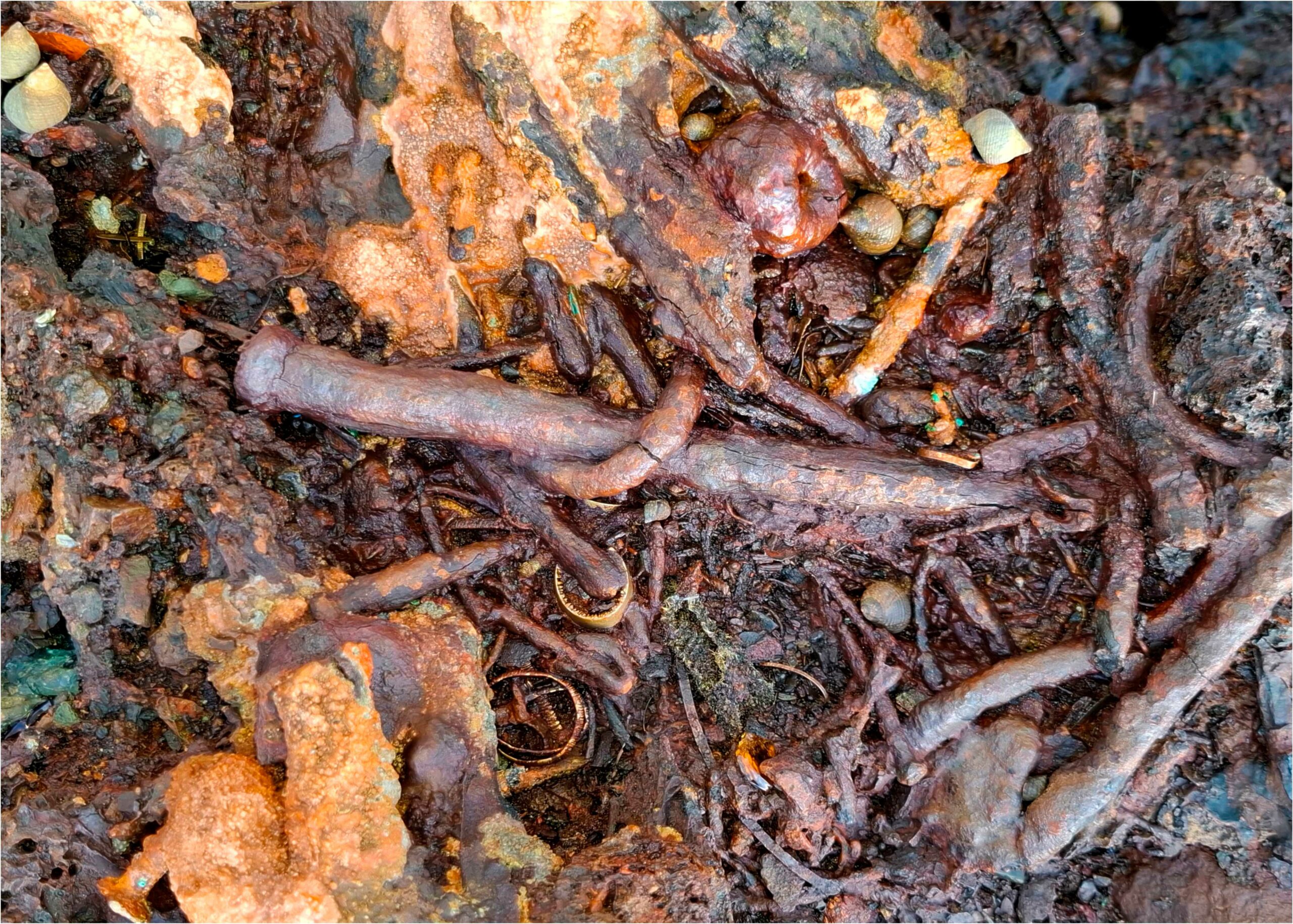
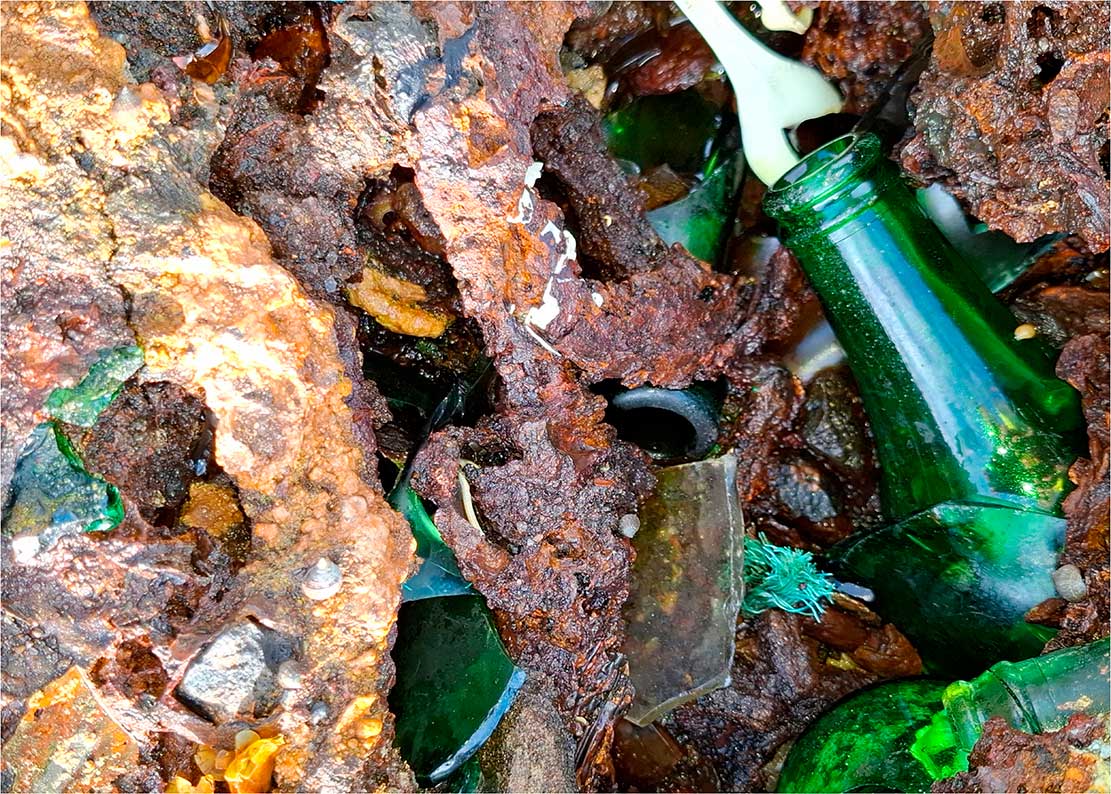
Fragments of glass of varying tones and origins are embedded within a matrix of oxides, compacted sand and decomposing organic matter. The surface shows signs of progressive mineralisation, as human residues begin to integrate into the rocky structure of the surrounding environment.

The assemblage recalls a recent archaeological layer, bearing witness to human impact on coastal sedimentary formation processes. The fusion of glass, oxidised metal and natural remains reveals a new geology of waste.

Layers of the Present 04

Artist: Jrmartin, 2025
Series: Layers of the Present
Medium: Digital print on aluminium
Dimensions: 42 × 30 cm
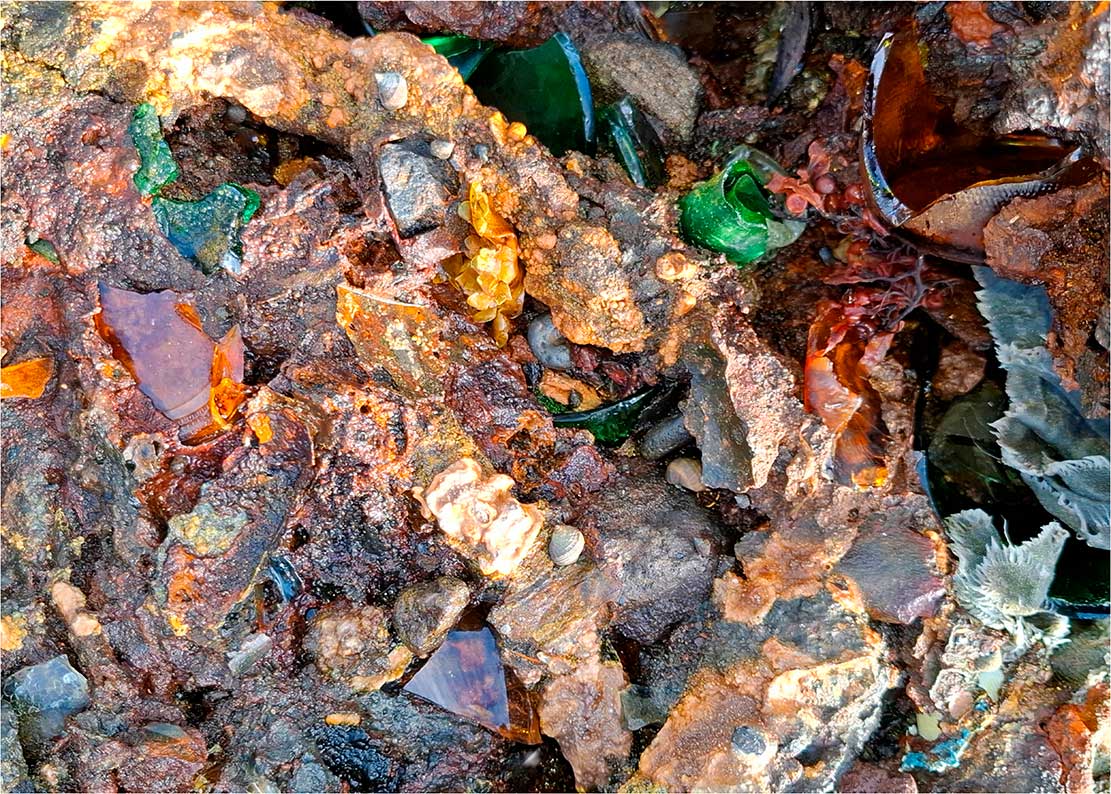
The image reveals a matrix rich in iron oxides, characterised by reddish tones and a stratified texture, within which small organic remains, sediments and artificial fragments are embedded. Signs of advanced oxidation and the porosity of the assemblage point to ongoing chemical and biological alteration within a coastal environment.

Prolonged interaction with salt water has encouraged the formation of crusts and mineral deposits. This section may be interpreted as an emergent micro-formation, produced through the interaction between human residues and coastal geological dynamics.

Layers of the Present 05

Artist: Jrmartin, 2025
Series: Layers of the Present
Medium: Digital print on aluminium
Dimensions: 42 × 30 cm
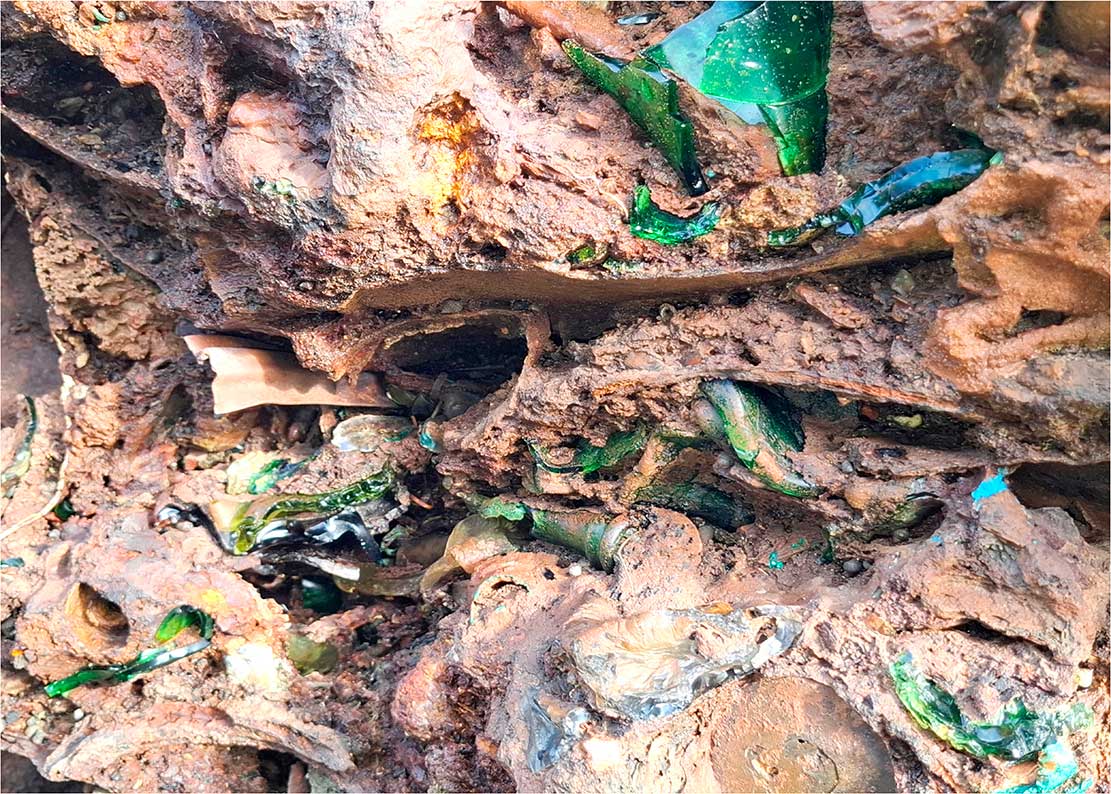
Fragmentos angulosos de vidrio, piedras erosionadas y restos biológicos aparecen integrados en una matriz rica en óxidos de hierro, altamente cementada. La disposición caótica de los materiales, junto con evidencias de mineralización superficial, sugiere una etapa temprana de transformación hacia estructura pétrea. Entre los elementos atrapados se identifican algas marinas, residuos textiles y fragmentos artificiales como plásticos y vidrios coloreados, parcialmente preservados en el sedimento. Esta escena ilustra cómo los procesos geológicos costeros conviven con la acumulación de residuos contemporáneos, dando lugar a un registro híbrido característico del Antropoceno.

Layers of the Present 06

Artist: Jrmartin, 2025
Series: Layers of the Present
Medium: Digital print on aluminium
Dimensions: 42 × 30 cm
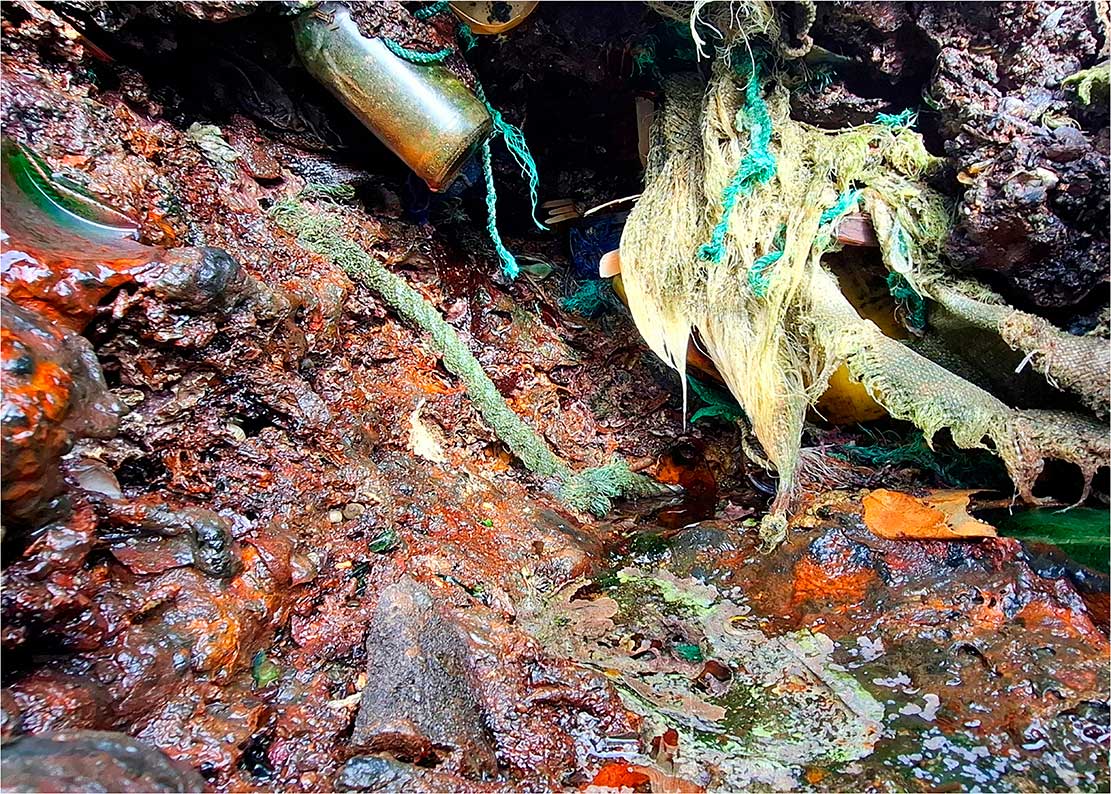
Fragments of glass are distributed across different layers within a matrix rich in iron oxides, forming cavities and porous structures that evoke sedimentary geological formations. The sediment, likely of volcanic origin, has been altered by processes of oxidation and compaction that favour the integration of residues.

The superposition of natural and artificial elements reveals a hybrid stratigraphy, in which the anthropogenic begins to consolidate with surrounding materials into structures of stone-like appearance. This process generates forms that could, in a distant future, be misinterpreted as entirely natural formations.

Layers of the Present 07

Artist: Jrmartin, 2025
Series: Layers of the Present
Medium: Digital print on aluminium
Dimensions: 42 × 30 cm
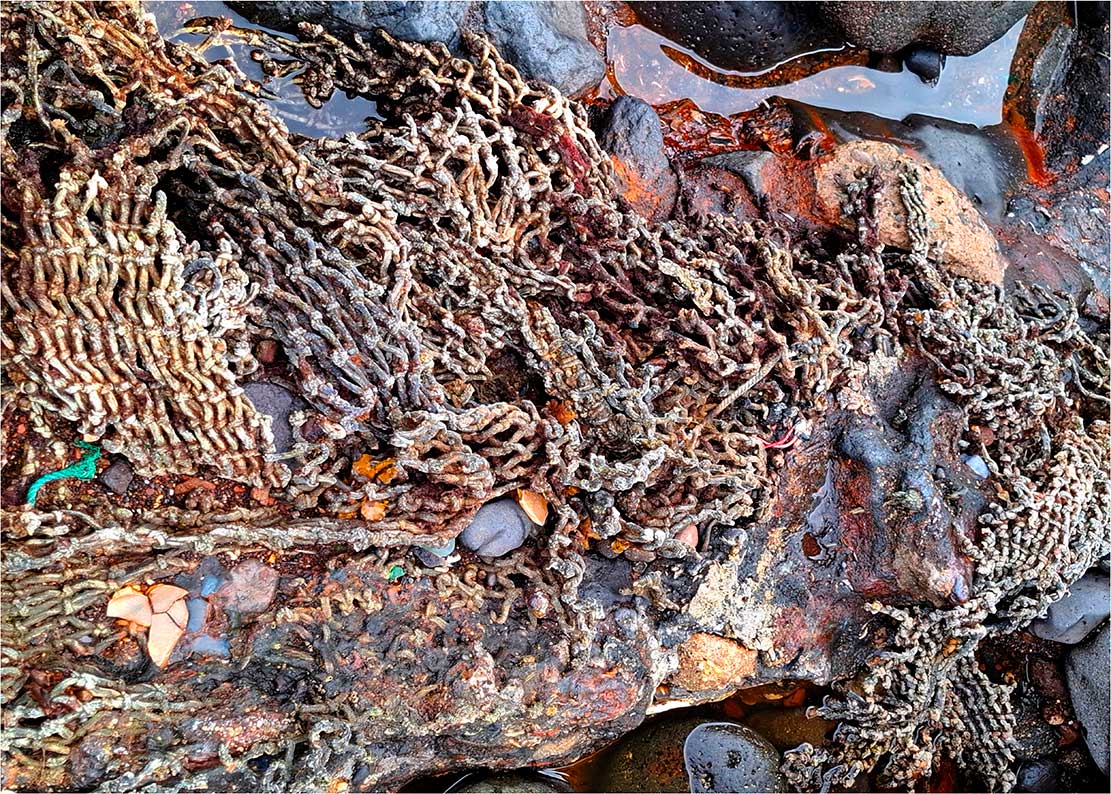
Synthetic textile fragments and plastic residues are partially embedded within a matrix rich in iron oxides undergoing compaction. The humid, saline environment favours processes of chemical and biological degradation, visible in the frayed fibres and chromatic shifts.

The scene reveals a microhabitat altered by human impact, where the organic and the artificial coexist within a process of stratigraphic integration. These materials, initially ephemeral, begin to consolidate within the substrate as part of an emerging geology of waste.

Layers of the Present 08

Artist: Jrmartin, 2025
Series: Layers of the Present
Medium: Digital print on aluminium
Dimensions: 42 × 30 cm
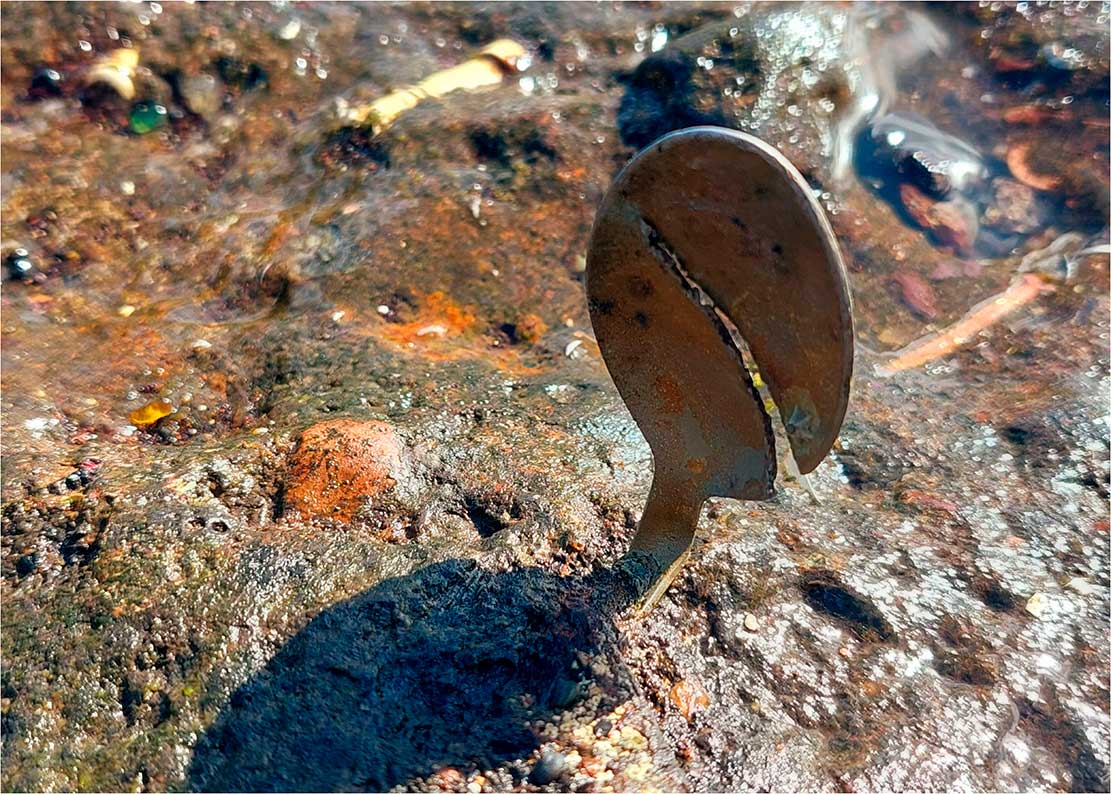
A synthetic textile mesh, possibly part of a fishing net, is adhered to a rocky substrate of volcanic origin. The assemblage has been modified by processes of oxidation, sediment accumulation and prolonged exposure to the intertidal environment. The fibres, now rigid and mineralised, demonstrate a progressive transformation that brings them closer in character to geological materials.

The image documents an advanced stage in the integration of residues into the coastal landscape, where the anthropogenic consolidates as a new component of the shoreline stratum.

Layers of the Present 09

Artist: Jrmartin, 2025
Series: Layers of the Present
Medium: Digital print on aluminium
Dimensions: 42 × 30 cm
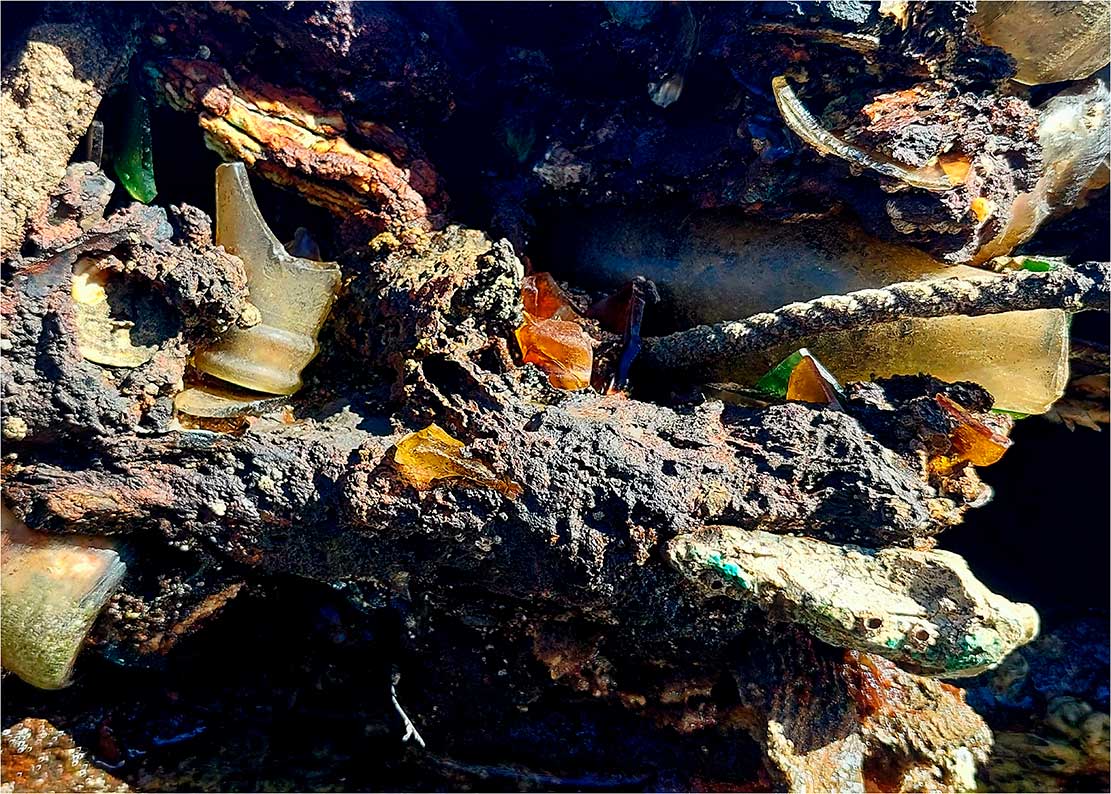
A metal spoon is partially embedded within a rocky surface of volcanic origin, likely fixed during a phase of coastal compaction and sedimentation. Oxidised and deformed, the object rises vertically as an anomalous marker within the intertidal landscape. Around it, small fragments of glass, organic matter and plastic residues are trapped within the consolidated matrix.

This scene condenses the accidental yet persistent character of human objects within the emerging geology of the Anthropocene.

Layers of the Present 10

Artist: Jrmartin, 2025
Series: Layers of the Present
Medium: Digital print on aluminium
Dimensions: 42 × 30 cm
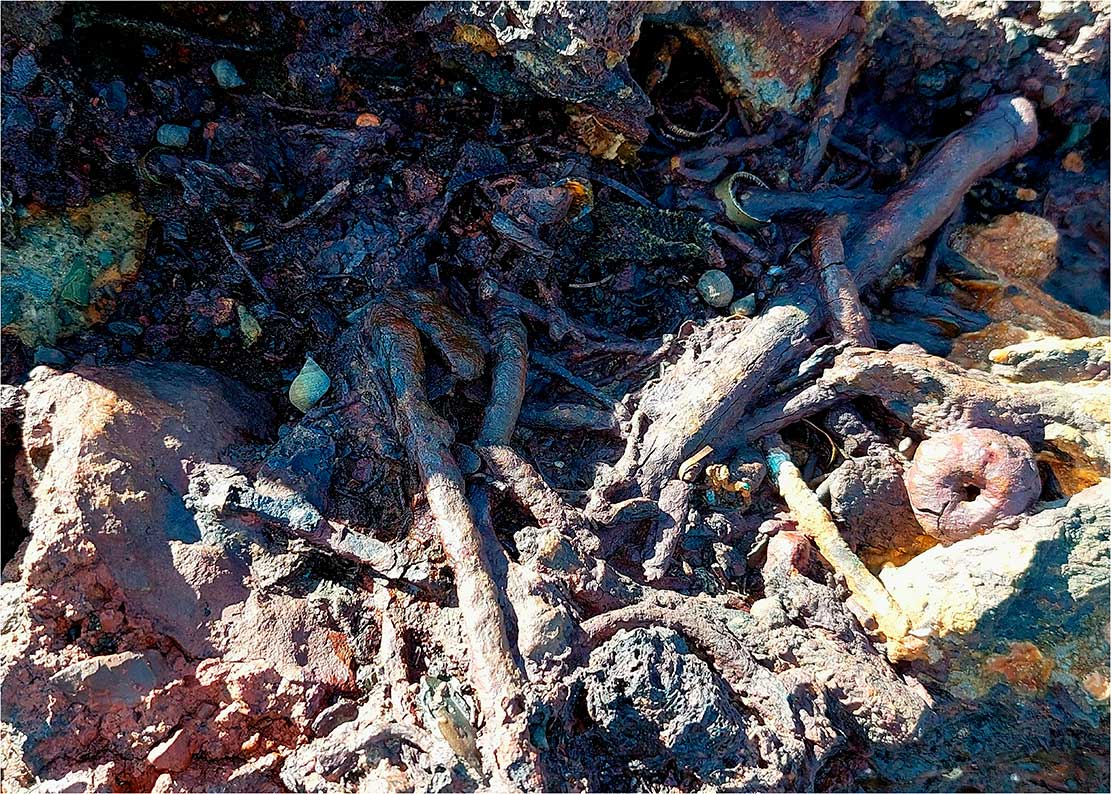
This image reveals fragments of glass and metallic remains embedded within a sedimentary matrix of ferruginous appearance. Broken bottles, deformed by physicochemical processes, coexist with textile residues and partially integrated plastic materials. Compaction and oxidation within the environment have produced a porous structure in which the residues of the Anthropocene consolidate alongside natural components.

The arrangement of elements evokes an artificial stratigraphic section, as though recent history were becoming fossilised within a future rock.

Layers of the Present 11

Artist: Jrmartin, 2025
Series: Layers of the Present
Medium: Digital print on aluminium
Dimensions: 42 × 30 cm
Corroded metallic remains, plastic fragments and sediments cluster within a compact matrix of volcanic origin, characterised by dark tones and a clay-like texture. The artificial elements appear intertwined with roots, sand and stones, as if transported and deposited through successive phases of sedimentation.

The interaction between organic and industrial materials suggests a process of consolidation that integrates them into stone-like structures. The scene evokes a hybrid geology in which the anthropogenic becomes a coastal stratum.

Layers of the Present 12

Artist: Jrmartin, 2025
Series: Layers of the Present
Medium: Digital print on aluminium
Dimensions: 42 × 30 cm
Fragments of oxidised metal and twisted rods intermingle with pieces of plastic, vegetal remains and rounded stones, forming an entangled network trapped within a sandy and clay-rich matrix. Some of these elements display signs of marine erosion, while others bear biological encrustations or traces of algae.

The assemblage appears to have been shaped by successive cycles of deposition, compaction and exposure, consolidating a structure in which the industrial and the natural converge within a new coastal formation.

Imprint of Residue

Artist: Jrmartin, 2025
Series: Layers of the Present
Medium: Hybrid sculpture / Assemblage
Materials: Artificial rock in cardboard with embedded recovered residues
Dimensions: 92 × 47 × 24 cm

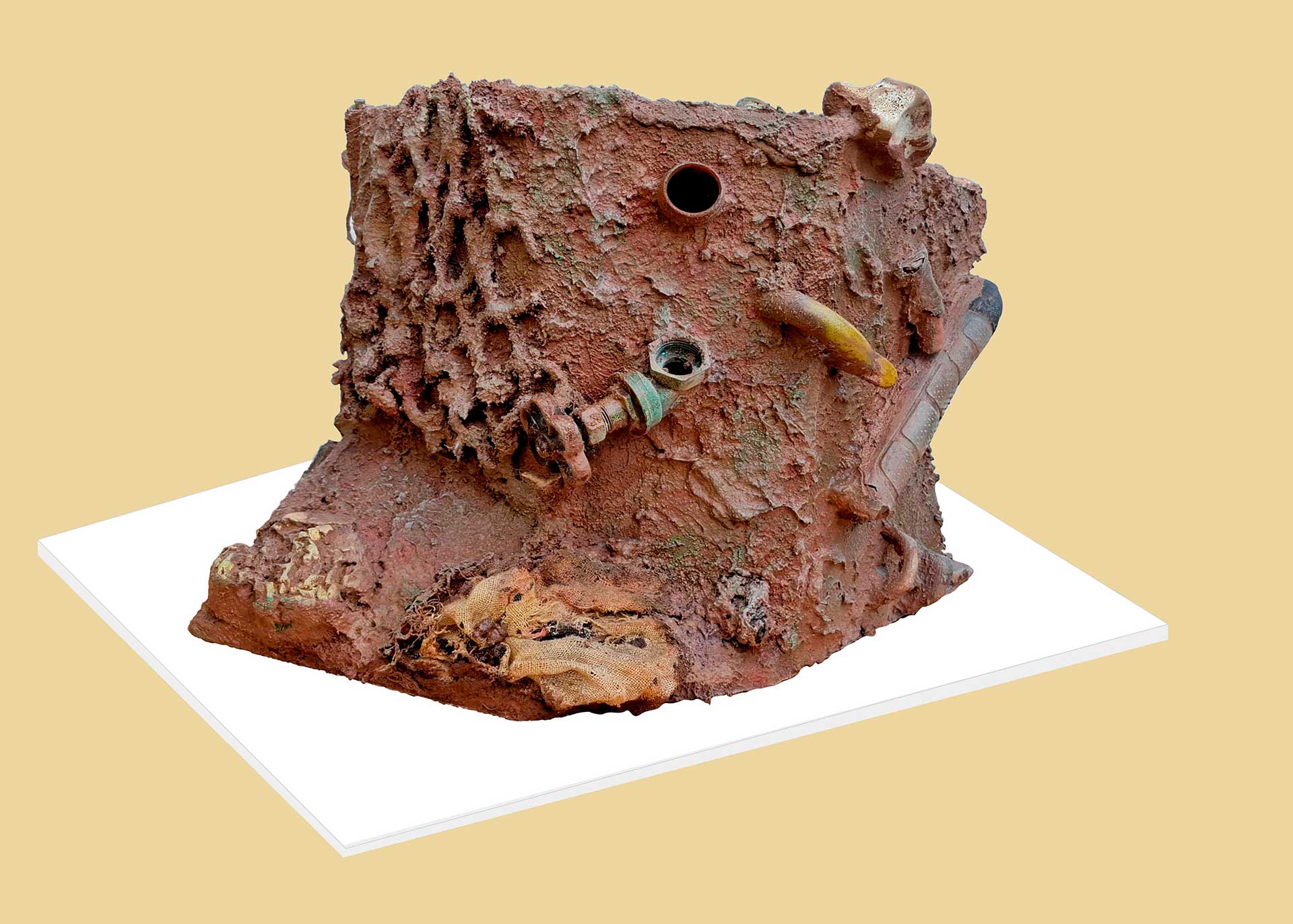
Imprint of Residue is a cardboard construction that imitates a fragment of coastal rock from the site where the materials were found. Into this fabricated “stone” real residues — broken glass, oxidised iron, industrial remains — are embedded so that the surface reads as an amalgam of matter consolidated in situ. The piece is conceived to resemble a section extracted from the ground: not merely an image of waste, but a three-dimensional extract of the landscape itself.

The result is a “lithographic section of the present”: a fossil imprint not of the past, but of our contaminated contemporaneity. The image ceases to be mere testimony and becomes form and volume — evidence incorporated into the terrain. With this work, the Layers of the Present series continues its exploration of residues as strata and of the aesthetics of impact as geological warning. What kind of future rock are we leaving behind?