
Layers of the Present

The landscape does not simply receive our waste. It also begins to preserve it.
Layers of the Present closes the thematic journey of Archaeologies of the Anthropocene with a series of twelve photographs taken along the coast of Gran Canaria.
They reveal plastics, metals, glass, textiles and other human remnants trapped, mixed or partially embedded among stones, sand, oxides and sediment.
Unlike Paintings from Below Ground, the primary concern here is not the abstract appearance of these surfaces, but the material relationship beginning to develop between waste and the terrain itself.
The photographs operate as fragments of an archaeology of the present: records of a landscape in which what we manufacture, use and discard is beginning to share space and time with natural materials.
These are not images of an imagined future.
They are images of something already taking place.
The Landscape as Archive

The origins of Layers of the Present lie in the same discovery that gave rise to the entire project.
Looking closely at this stretch of coastline, I found surfaces where waste no longer appeared simply to be lying on the ground. Fragments were trapped among sediments, eroded materials, oxides and natural remains.
The landscape began to resemble an archive.
Not an archive that had been ordered or deliberately constructed, but one produced through accumulation, abandonment, erosion and time.
Photography allowed me to isolate small fragments of this territory and observe them almost as archaeological sections.

The Embedded Trace

These images contain textiles, cables, metals, glass, plastics and other materials that clearly retain their human origin while simultaneously beginning to become physically and visually part of the environment that contains them.
I do not use the word ‘layer’ here in a strictly geological sense.
I use it as a way of reading the landscape.
What interests me is the point at which it becomes difficult, at first glance, to separate what belongs to the terrain from what arrived there as a consequence of human activity.
Materials fragment, corrode, erode, become trapped or mix with other elements, yet their presence persists.
It is precisely this persistence that turns the landscape into evidence.

An Archaeology of the Present

The term Anthropocene is widely used to describe the scale of human transformation of the planet.
Within this project, I am interested in something more specific: the material trace we leave behind and its capacity to endure.
Archaeology often allows us to reconstruct earlier societies through what has survived them. Layers of the Present reverses that temporal perspective and directs it towards our own time.
These twelve photographs do not attempt to predict scientifically what the geology of the future will look like.They pose a much simpler artistic question:
What are we leaving behind that may one day speak about us?
The remnants shown in these images belong to the present. Yet some have already begun to acquire the appearance of something ancient, sedimented or even fossil-like.
For me, these photographs therefore become pages in a history that we are still writing.
They do not speak of a vanished civilisation.
They speak of ours.
An archaeology beginning before the present has even ended.

Layers of the Present 01

Artist: José R. Martín (Jrmartin), 2025
Series: Layers of the Present
Medium: Digital print on aluminium
Dimensions: 42 × 30 cm
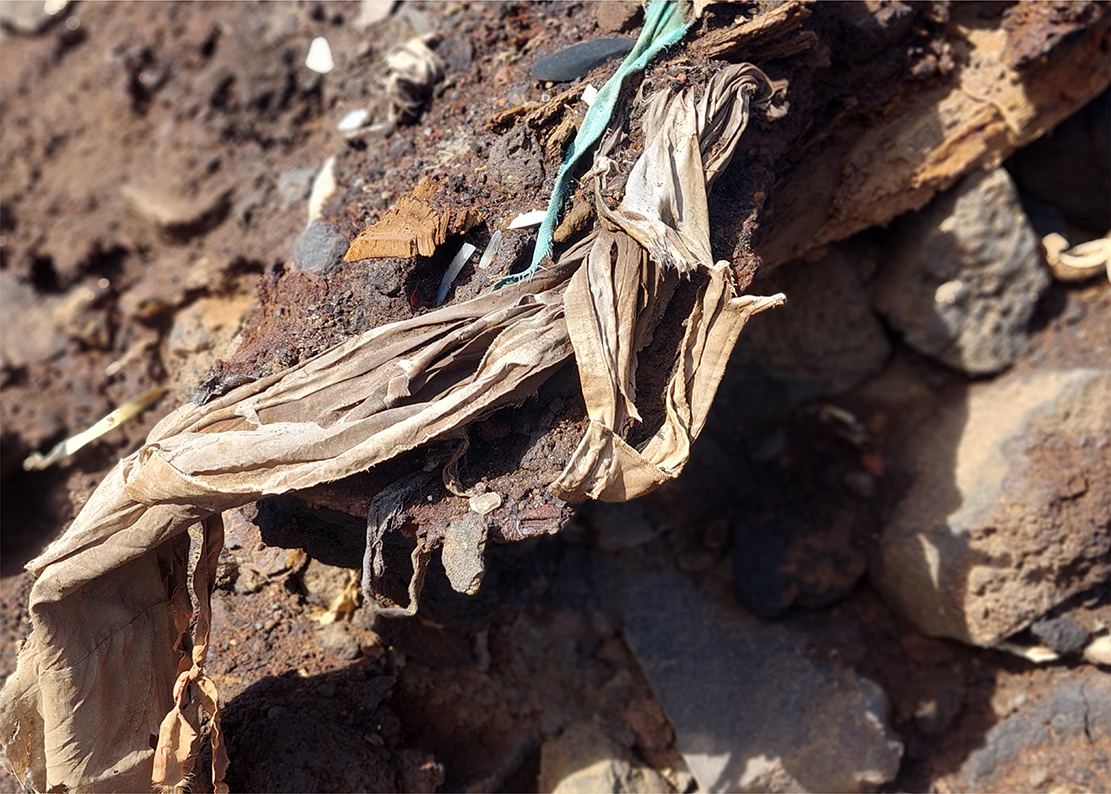
A fragment of synthetic material appears trapped among soil, stones and other materials along the shoreline.
What caught my attention was precisely this relationship.
The waste no longer appears simply deposited on the surface. Part of it remains concealed while another part emerges from the ground, as though the two materials were beginning to occupy the same space.
We do not know how long it has been there or exactly which processes produced this arrangement.
The photograph records only what I found: human-made and natural matter appearing together until, at moments, they become difficult to separate.
This coexistence is where Layers of the Present begins.

Layers of the Present 02

Artist: José R. Martín (Jrmartin), 2025
Series: Layers of the Present
Medium: Digital print on aluminium
Dimensions: 42 × 30 cm
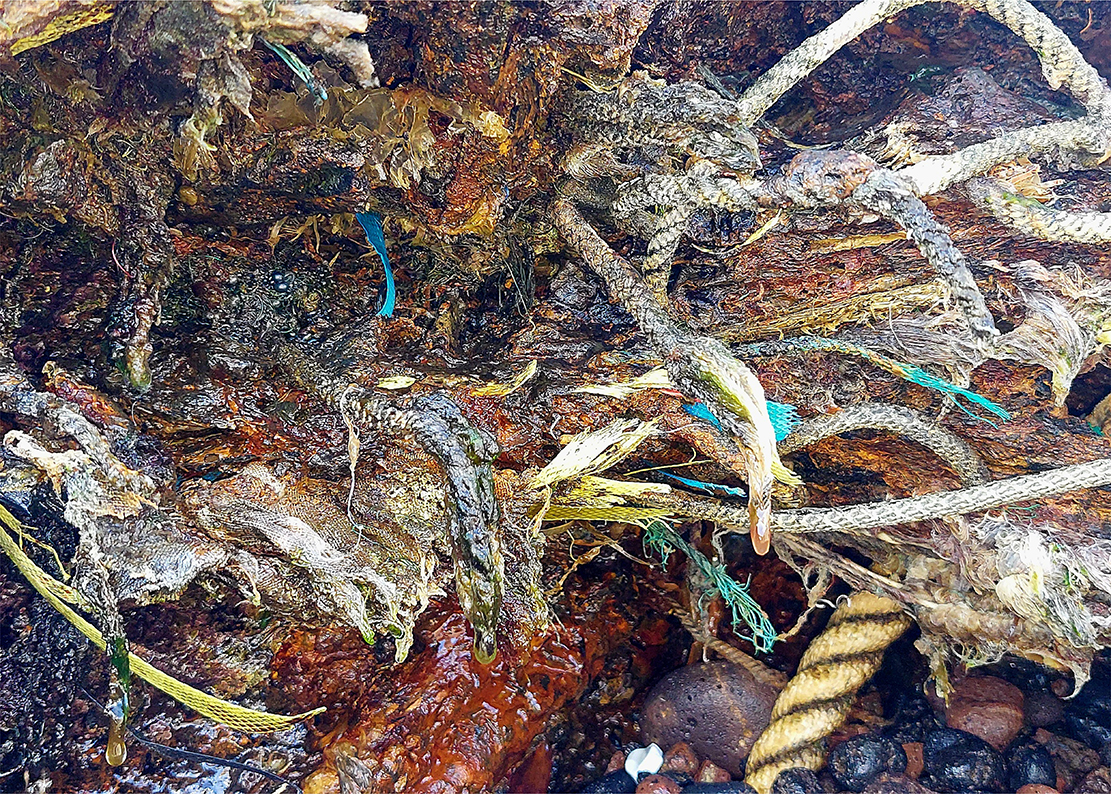
Ropes, fibres, plastic fragments and other remains appear interwoven with stones and shoreline materials, forming an accumulation that is difficult to separate visually.
Here, the distinction between one material and another begins to blur.
Some objects can still be recognised by their shape or colour. Others are so deteriorated, covered over, or entangled with what surrounds them that they begin to lose their original identity.
They no longer seem like mere waste deposited on the ground.
They become part of a shared surface in which natural matter and manufactured matter overlap, intertwine, and coexist.
The more these objects deteriorate, the harder it becomes to distinguish them from the place that contains them.

Layers of the Present 03

Artist: José R. Martín (Jrmartin), 2025
Series: Layers of the Present
Medium: Digital print on aluminium
Dimensions: 42 × 30 cm
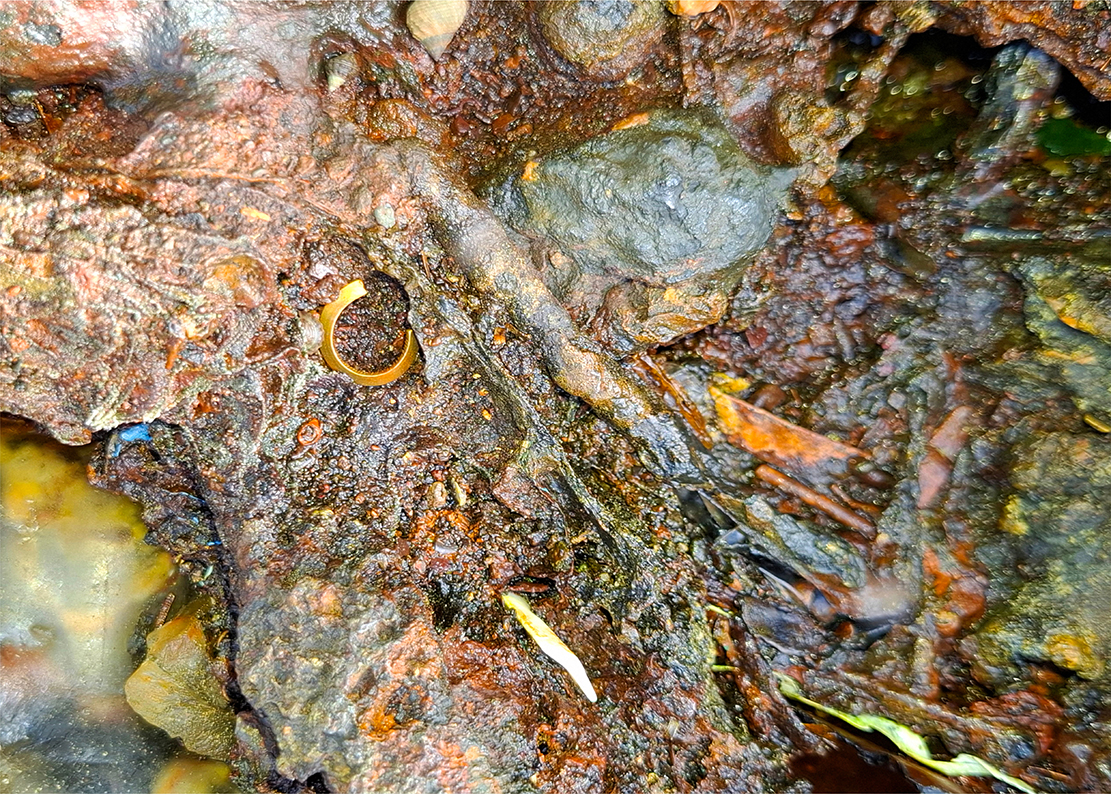
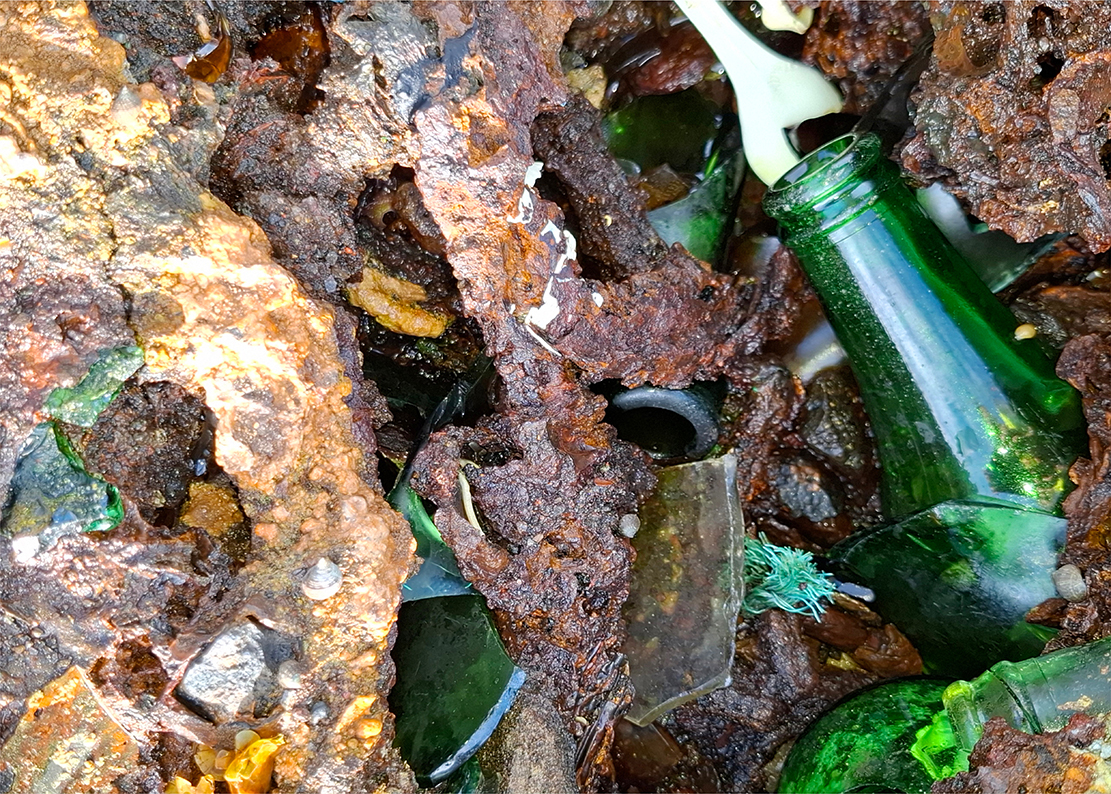
Fragments of glass, some still recognisable as bottles, appear trapped among oxides, sediment and other shoreline remains.
Here, the contrast between the materials is particularly evident.
The shine and colour of the glass stand out against the dark, deteriorated surface, while at the same time the fragments appear partially surrounded and contained by it.
They no longer seem like isolated objects deposited on the ground.
They form part of an accumulation in which natural and human-made materials begin to share the same surface.
The waste still retains its identity, but the place itself is also beginning to claim it as part of its own.

Layers of the Present 04

Artist: José R. Martín (Jrmartin), 2025
Series: Layers of the Present
Medium: Digital print on aluminium
Dimensions: 42 × 30 cm
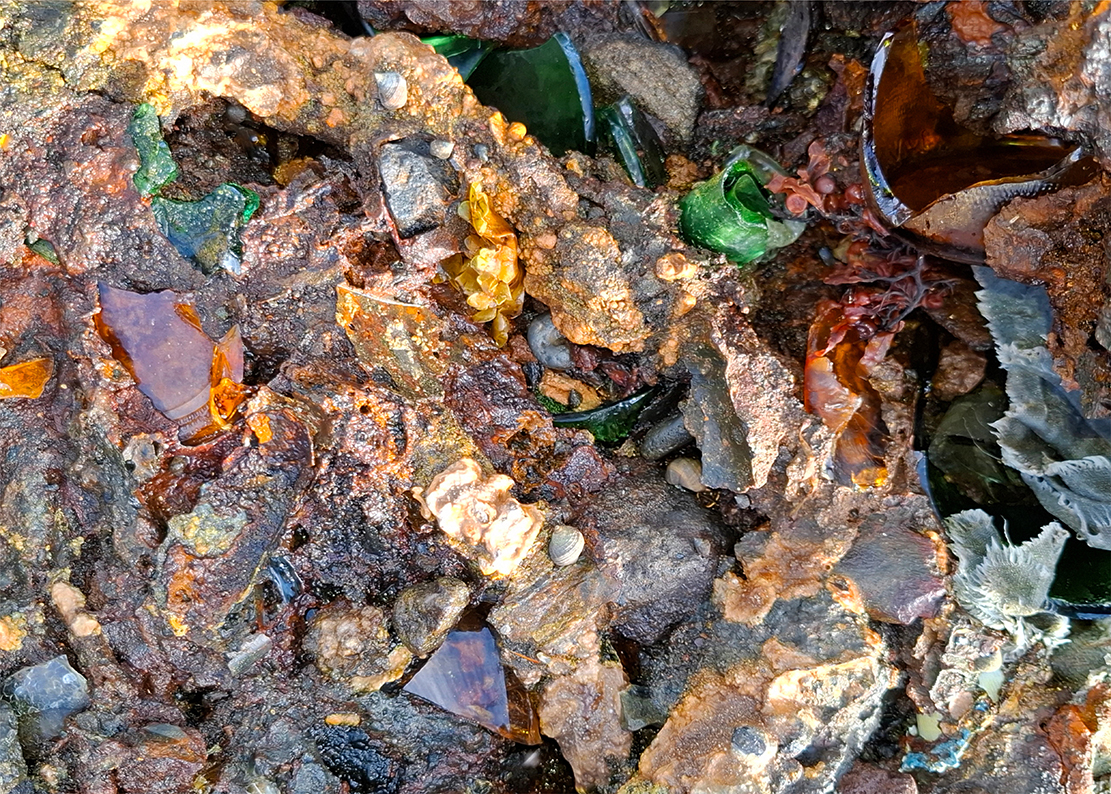
Deeply corroded metal remnants cross and accumulate among stones, sediment, fragments of glass and small shells.
In this image, no element appears completely isolated.
The metal runs across the surface, passes between other materials and ultimately forms a dense structure with them. Some forms can still be recognised by their original appearance; others have almost completely lost it beneath corrosion and deterioration.
The photograph records this overlapping without attempting to reconstruct how it occurred.
What matters is what remains visible: materials of different origins now occupying the same physical space.
Here, the waste is not simply lying on the ground: it has become entangled with it.

Layers of the Present 05

Artist: José R. Martín (Jrmartin), 2025
Series: Layers of the Present
Medium: Digital print on aluminium
Dimensions: 42 × 30 cm
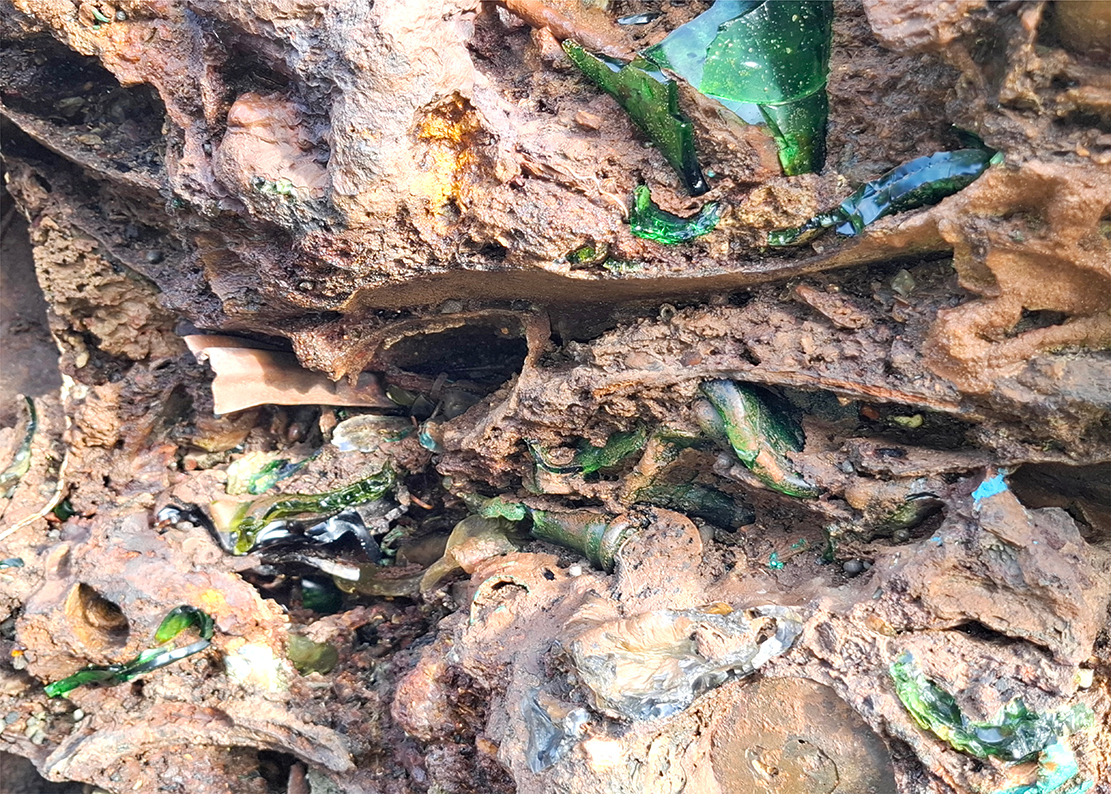
Fragments of glass in different colours are embedded in a dense surface of oxides, hardened sediment, small shells and organic remains.
The image does not show scattered materials, but an accumulation that has already become compacted, with each element held בתוך the same irregular mass.
The glass still retains its recognisable identity, yet it no longer appears in isolation: it coexists with ferruginous crusts, eroded matter and signs of wear produced by the marine environment.
The photograph focuses precisely on that intermediate condition.
What we see is not a clear separation between waste and ground, but a surface in which the two begin to merge.
Here, the human trace is not merely deposited on the shoreline: it begins to become fixed within it.

Layers of the Present 06

Artist: José R. Martín (Jrmartin), 2025
Series: Layers of the Present
Medium: Digital print on aluminium
Dimensions: 42 × 30 cm
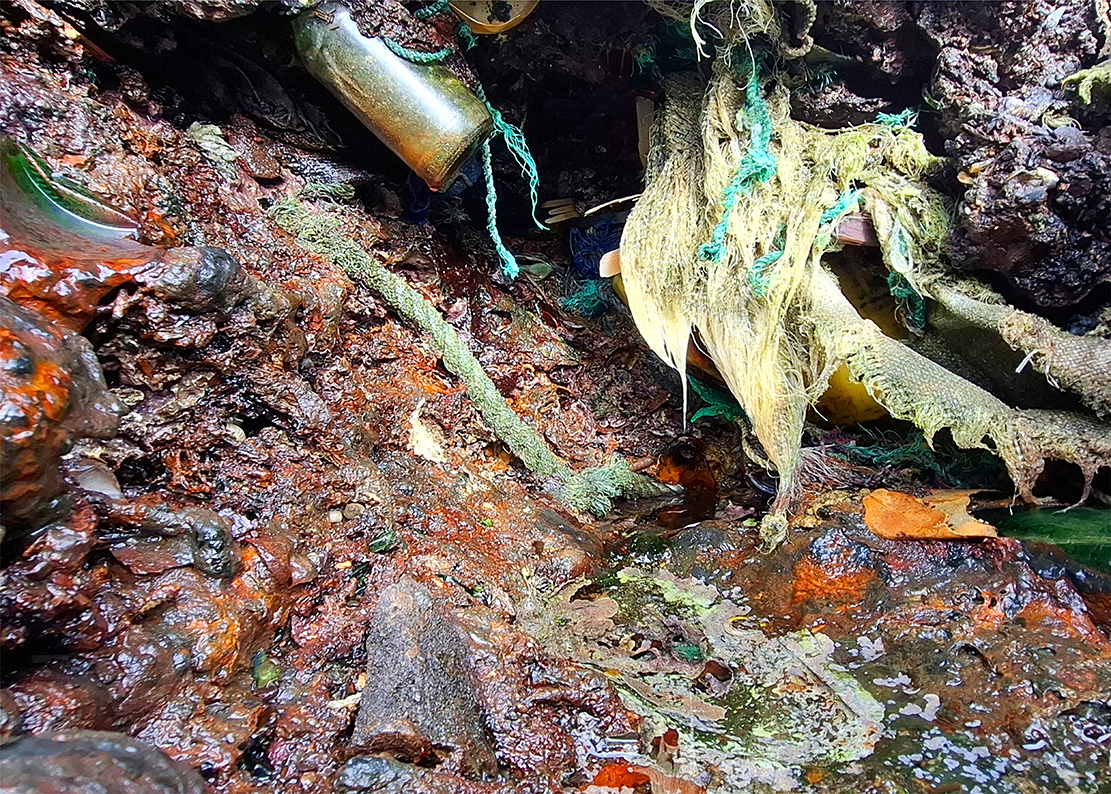
Fragments of green glass appear lodged at different depths within an irregular surface of sediment, corroded remains and other shoreline materials.
Here, the relationship between waste and ground takes on a different dimension.
Some fragments remain clearly visible; others barely emerge from cavities, folds and accumulations of matter. The surface is no longer perceived as a single plane, but begins to reveal successive areas of concealment and exposure.
The glass retains its colour and its artificial character, yet it is held within a structure that seems to surround it.
The photograph records precisely this sense of depth.
The waste no longer occupies only the surface: it appears trapped within it.

Layers of the Present 07

Artist: José R. Martín (Jrmartin), 2025
Series: Layers of the Present
Medium: Digital print on aluminium
Dimensions: 42 × 30 cm
Ropes and synthetic fibres appear trapped among corroded remains, sediment and other materials accumulated along the shoreline.
Unlike some of the other images in the series, the waste here retains a clearly recognisable presence.
The colour, texture and twisted structure of the ropes make their manufactured origin immediately apparent, while deteriorated materials accumulate around them, seeming almost to close in and hold them in place.
The image therefore brings together two different states: objects that still retain their identity and a surface that is beginning to surround and contain them.
They have not yet become indistinguishable from the ground.
This is the point at which the manufactured and the natural begin, inevitably, to occupy the same place.

Layers of the Present 08

Artist: José R. Martín (Jrmartin), 2025
Series: Layers of the Present
Medium: Digital print on aluminium
Dimensions: 42 × 30 cm
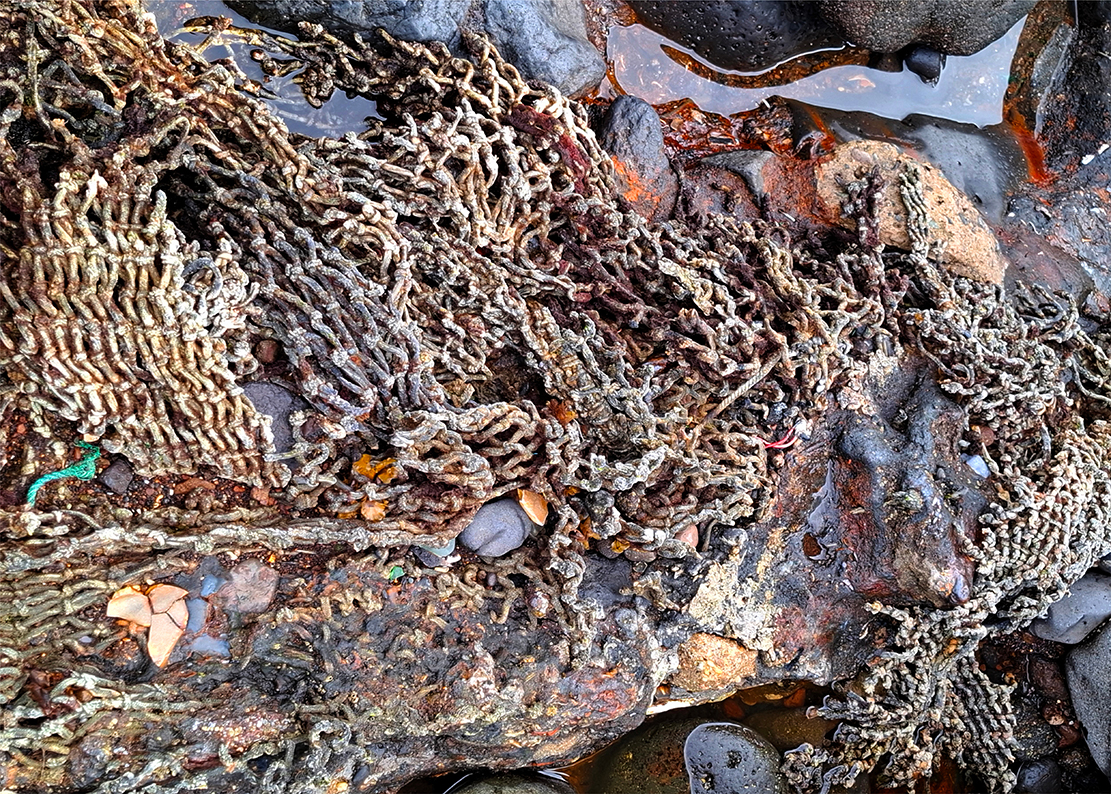
A deeply deteriorated synthetic mesh or net extends across stones and accumulated remains along the shoreline.
Its pattern is still clearly recognisable, yet it has lost the flexibility and appearance it must once have had. The fibres appear hardened, covered and attached to the materials around them.
Here, the regular repetition of the net contrasts with the irregularity of the ground while, at the same time, beginning to merge visually with it.
The manufactured material still retains its structure, but its appearance already belongs to another state.
A pattern made by us begins to resemble another texture of the landscape.

Layers of the Present 09

Artist: José R. Martín (Jrmartin), 2025
Series: Layers of the Present
Medium: Digital print on aluminium
Dimensions: 42 × 30 cm
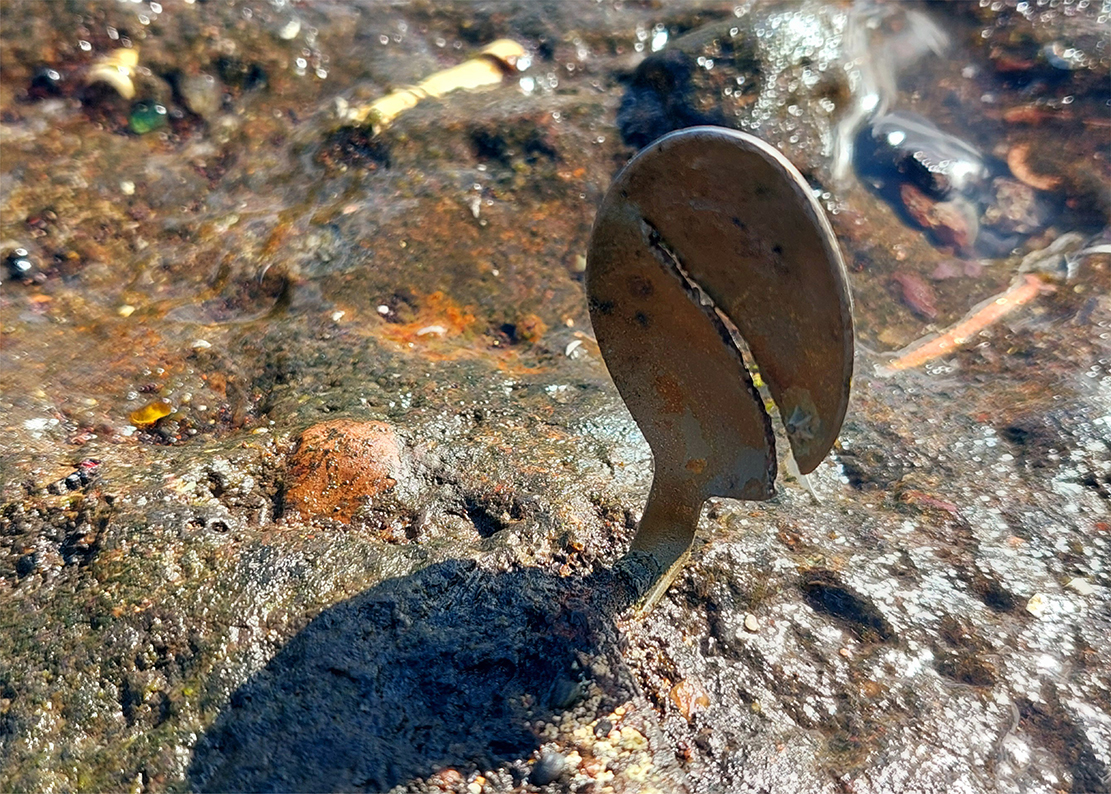
A deformed metal spoon, partially trapped within the surface, emerges among sediment and other small shoreline remains.
Unlike some of the other images in the series, the object here remains immediately recognisable.
We know at once what it was and what it was used for.
That is precisely what makes its presence unsettling. An object belonging to everyday life now appears separated from its function and held within a place for which it was never intended.
The photograph therefore brings together two different times: that of the object we can still recognise and that of the deterioration that has begun to transform it.
The everyday object remains identifiable, but it has already begun to become something else.

Layers of the Present 10

Artist: José R. Martín (Jrmartin), 2025
Series: Layers of the Present
Medium: Digital print on aluminium
Dimensions: 42 × 30 cm
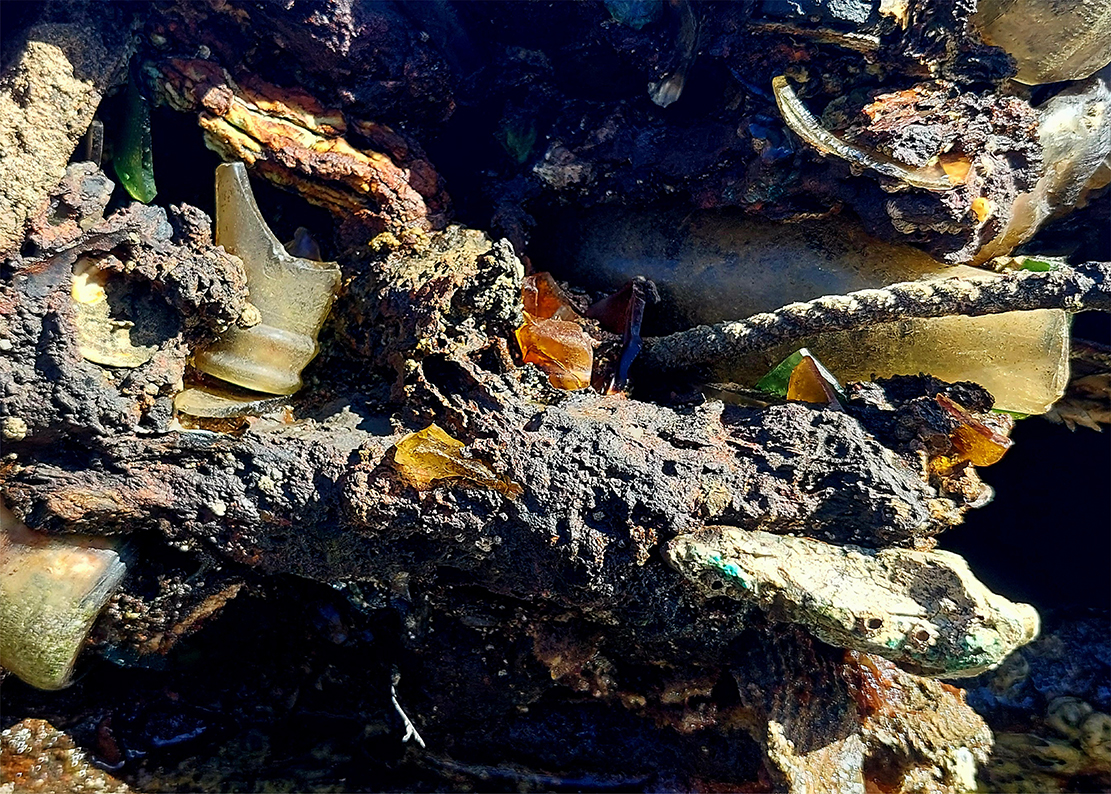
Fragments of bottles, corroded metal objects and other remains appear lodged among materials accumulated along the shoreline.
Different degrees of transformation coexist within this image.
Some fragments of glass still retain their shape, transparency and colour. Other materials have been altered to the point where they are much more difficult to recognise.
This contrast makes visible the passage of time across objects that once had different functions and origins, but which now appear gathered within the same surface.
The photograph does not attempt to reconstruct how they arrived there. It records the condition in which I found them.
Some objects still reveal what they once were; others are already beginning to lose that memory.

Layers of the Present 11

Artist: José R. Martín (Jrmartin), 2025
Series: Layers of the Present
Medium: Digital print on aluminium
Dimensions: 42 × 30 cm
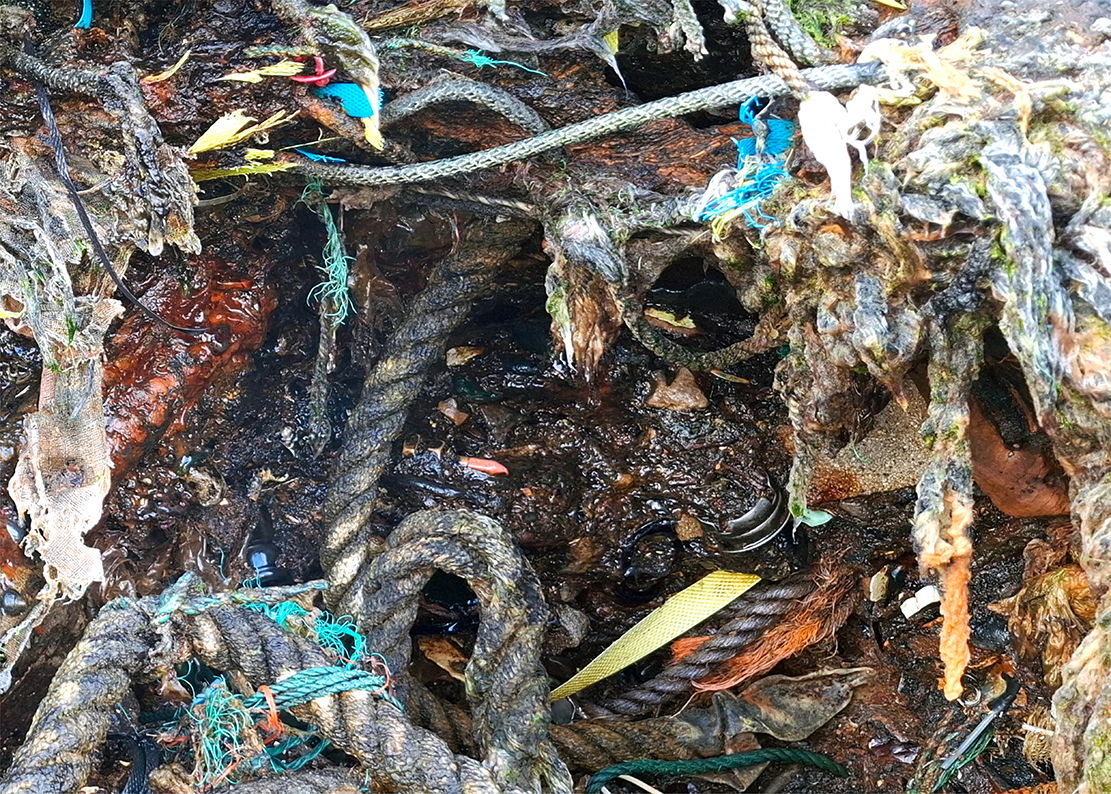
Heavily corroded metal remains, small human-made fragments, shells and sediment come together within a dark, deeply deteriorated surface.
At first glance, it is difficult to distinguish one material from another.
Forms intersect, fragment and share similar tones until it becomes less obvious what belongs to the surrounding environment and what originated as a manufactured object.
Some remains still allow their origin to be partly recognised. Others have almost completely lost that reference.
The photograph focuses on this point of uncertainty.
As the differences begin to disappear, the way we read the landscape also begins to change.

Layers of the Present 12

Artist: José R. Martín (Jrmartin), 2025
Series: Layers of the Present
Medium: Digital print on aluminium
Dimensions: 42 × 30 cm
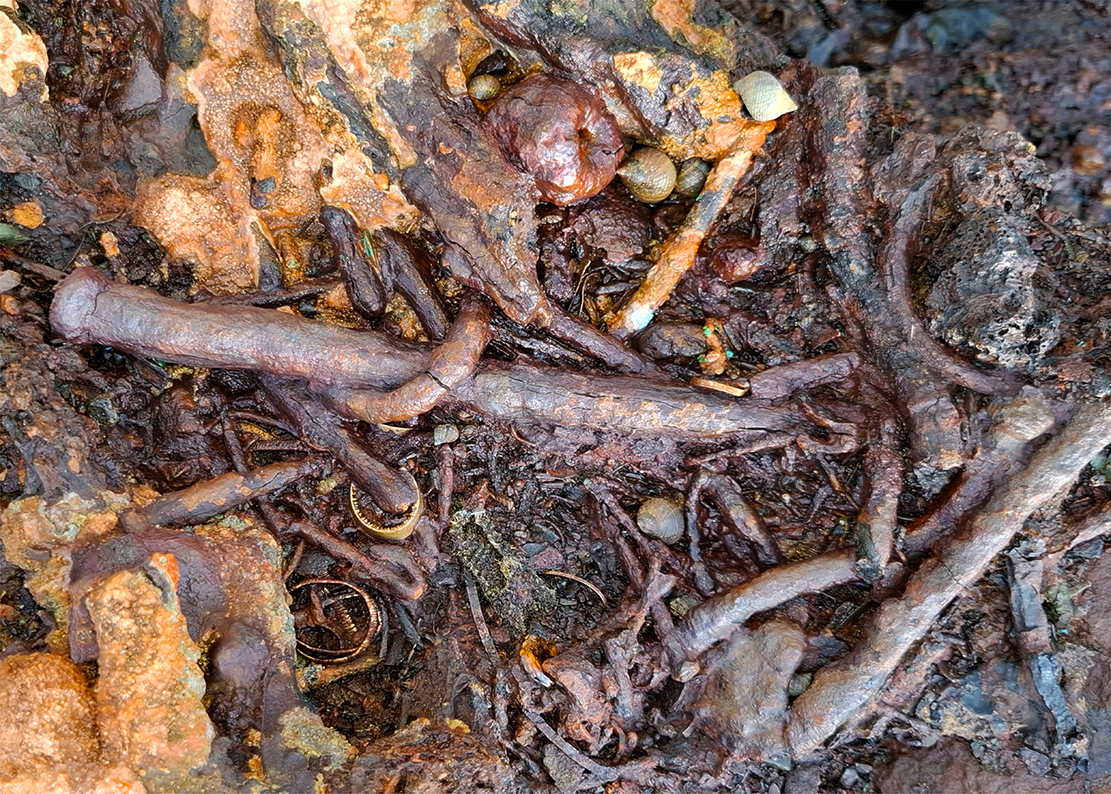
Corroded metal rods and remnants run across a surface in which shells, stones, sediment and small fragments of human origin also appear.
The accumulation forms an irregular structure in which it becomes difficult to draw a clear distinction between one material and another.
The metal still retains some recognisable forms, yet it now shares colours, textures and space with everything around it. The manufactured material has not disappeared, but neither does it remain isolated.
The photograph records this coexistence as it appears within the terrain.
As the final image in the series, it does not suggest an ending, but the continuation of a process already taking place before us.
The final layer does not close the landscape: it makes visible what has already become part of it.

Imprint of Residue

Artist: José R. Martín (Jrmartin), 2025
Series: Layers of the Present
Medium: Hybrid sculpture / Assemblage
Materials: Artificial rock with embedded recovered residues
Dimensions: 92 × 47 × 24 cm

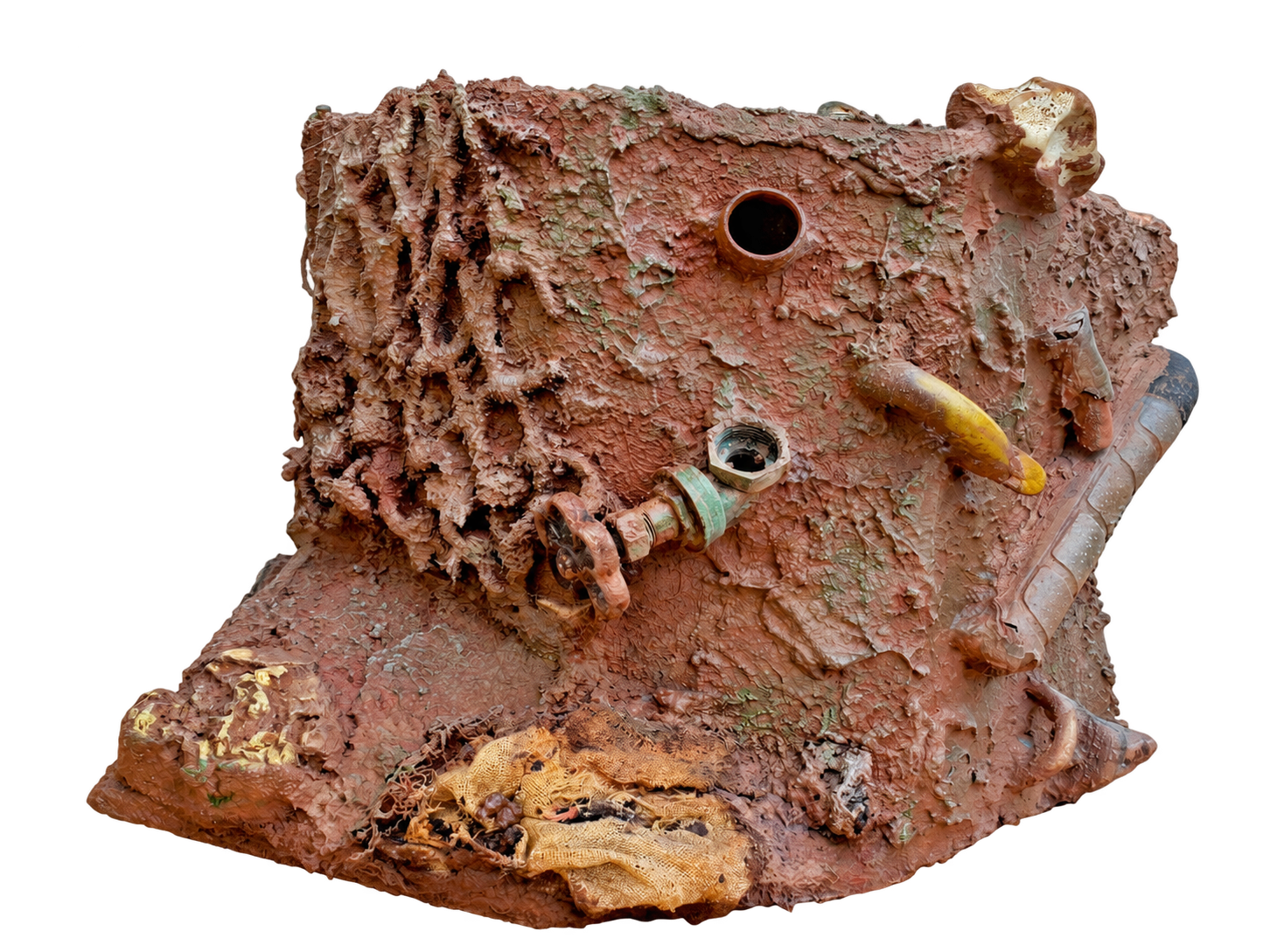
Impression of the Residue brings the logic of Layers of the Present into three dimensions.
The piece simulates a section of terrain using real debris collected from the coast and embedded in a surface made from soil gathered on site, adhesives and paint. Beneath its stone-like appearance is a cardboard structure reinforced internally with polyurethane foam.
What appears in the photographs as surface becomes body and volume here.
It does not reproduce a specific fragment of landscape, but constructs a possibility from what was found.
The stratum ceases to be an image and becomes an object.